
Complete Giant Strawberry (Fragaria × ananassa L.'Maximus') Grow Kit
The Complete Giant Strawberry Grow Kit is an exciting and easy way to grow your own large, juicy strawberries at home. Designed for both beginners and experienced gardeners, this all-in-one kit contains everything needed to start cultivating delicious strawberries. Whether you have a spacious garden, a patio, or a sunny balcony, the kit makes growing fresh fruit simple and enjoyable.
With carefully selected giant strawberry seeds, growing medium, and easy-to-follow instructions, the Complete Giant Strawberry Grow Kit takes the guesswork out of gardening. Watching the plants develop from seed to fruit is a rewarding experience for the whole family. The vibrant plants also add beauty to outdoor and indoor spaces while producing sweet, flavourful strawberries for your enjoyment.
Growing your own strawberries provides a fresh and healthy source of fruit right at your doorstep. The giant strawberry variety is known for producing impressively sized berries with a delicious taste, making them perfect for snacks, desserts, smoothies, and homemade treats. Homegrown strawberries are not only satisfying to harvest but can also help reduce grocery costs over time.
You can buy the Complete Giant Strawberry Grow Kit today and start your strawberry-growing journey with confidence.

What’s Included in Your Complete Giant Strawberry Grow Kit
✅ 5 x Giant Strawberry Fragaria × ananassa L. 'Maximus' Seeds:
Premium, high-potency seeds bred specifically to yield colossal, sweet berries.
✅ 1 x Germination Mix Packet (500g):
A professionally balanced, fine-texture propagation medium engineered for optimal moisture retention and rapid root emergence.
✅ 5 x Biodegradable Peat Pots:
Eco-friendly starter pots that allow seamless transplanting directly into the soil without disturbing delicate root systems.
✅ 5 x Humidity Domes:
Lock in essential warmth and moisture to create the perfect germination microclimate.
✅ 1 × High-Phosphorus Feed Sachet (150g):
A specialized starter nutrient formula tailored to ignite explosive early root development and strong seedling establishment.
✅ 1 x High-Potassium Feed Sachet (300g):
A premium fruiting booster designed to maximize berry size, boost natural sugar content, and yield dense, heavy fruit.
✅ 1 x Seed Cold Stratification Pouch:
A convenient, moisture-sealed pouch designed to make refrigerator chilling effortless and trigger high germination rates.
✅ 1 x Packet of Stratification Medium:
A pre-sterilized substrate that cushions seeds during cold treatment to safely break dormancy.
✅ 5 x Plant Markers:
Durable, weatherproof plant labels to track your germination timelines and keep your growing space organized.
✅ 1 x Spray Bottle:
A fine-mist sprayer that delivers delicate hydration without disturbing tiny surface-sown seeds or compacting soil.
✅ 1 x Giant Strawberry Cultivation Manual:
An authoritative, step-by-step master guide filled with expert horticultural advice tailored specifically to success in the South African climate.
South African Sowing & Growth Calendar for Fragaria × ananassa L. 'Maximus'
🟠 Sowing: Late Winter to Early Spring (August to September) under indoor temperature control (18°C to 24°C); or Autumn (March to April) in frost-free regions.
🟠 Germination: 14 to 56 days (2 to 8 weeks), depending on seed stratification and steady soil temperature.
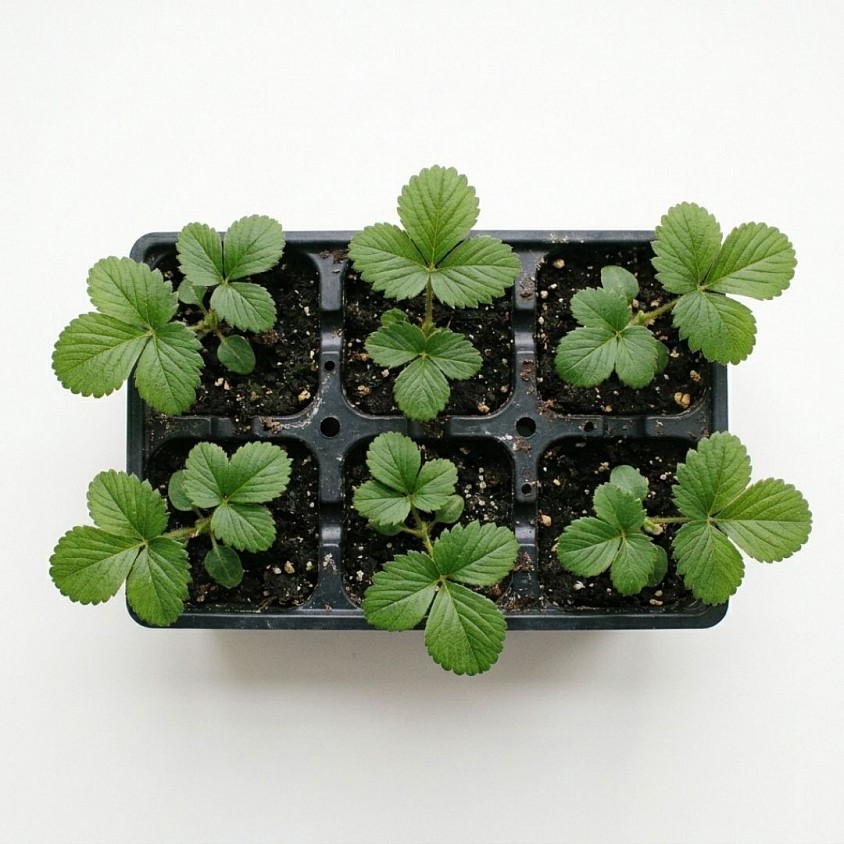
🟠 Transplanting: 6 to 10 weeks post-germination (October to November for spring sowings, or April to May for autumn sowings) once seedlings develop 4–5 true leaves and night-time temperatures exceed 15°C.
🟠Flowering: Early Summer to Late Summer (October to February for spring sowings); or Late Winter to Spring (August to November for autumn sowings).
🟠 Harvesting: Early Summer through Autumn (November to April) for spring-sown crops; or Late Winter to Early Summer (August to December) for autumn-established crops.
🟠 Suitable regions include: Summer Rainfall Regions (Gauteng, Highveld, Free State), Winter Rainfall Regions (Western Cape), Subtropical & Humid Coastal Zones (KwaZulu-Natal Coast, KZN Midlands), and Moderate Coastal/Oceanic Regions (Garden Route & Eastern Cape).

Why Growers Choose This Kit
This kit supplies everything required to successfully propagate giant strawberries from seed to harvest.
🍓 Authentic Giant Strawberry Genetics
Includes five premium Fragaria × ananassa L. 'Maximus' seeds selected specifically for their ability to produce massive, exceptionally sweet fruit.
🍓 Guaranteed Germination Environment
Features a cold stratification pouch and medium paired with biodegradable peat pots, custom humidity domes, and pre-mixed propagation soil to break seed dormancy and ensure rapid, reliable seedling emergence.
🍓 Targeted Stage-Specific Nutrition
Includes dual-phase fertilizers featuring a high-phosphorus formula for explosive early root establishment and a high-potassium formula designed to maximize berry size, weight, and natural sugar content.
🍓 Expert Climate-Specific Guidance
Comes complete with an authoritative step-by-step cultivation manual tailored specifically for managing soil, sun, and seasonal conditions in the South African climate.


Basic Giant Strawberry Grow Kit
The Basic Giant Strawberry Grow Kit is designed for growers who want authentic, high-yielding results on a practical budget. Perfect for beginners and space-conscious gardeners alike, this streamlined kit strips away unnecessary extras while keeping the essential elements required to successfully germinate and grow Fragaria × ananassa L. 'Maximus' right at home.
Inside, you will find our premium giant strawberry seeds alongside high-grade propagation soil, eco-friendly starter pots, and clear humidity covers to create the perfect microclimate for sprouting. Combined with straightforward instructions tailored to the South African climate, this kit gives you a simple, reliable, and cost-effective pathway to harvesting sweet, impressive strawberries from your own garden.

What’s Included in Your Basic Giant Strawberry Grow Kit
✅ 5 x Giant Strawberry Fragaria × ananassa L. 'Maximus' Seeds:
Premium, high-potency seeds bred specifically to yield colossal, sweet berries.
✅ 1 x Germination Mix Packet (500g):
A professionally balanced, fine-texture propagation medium engineered for optimal moisture retention and rapid root emergence.
✅ 5 x Biodegradable Peat Pots:
Eco-friendly starter pots that allow seamless transplanting directly into the soil without disturbing delicate root systems.
✅ 5 x Humidity Domes:
Lock in essential warmth and moisture to create the perfect germination microclimate.
✅ 1 x Seed Cold Stratification Pouch:
A convenient, moisture-sealed pouch designed to make refrigerator chilling effortless and trigger high germination rates.
✅ 1 x Packet of Stratification Medium:
A pre-sterilized substrate that cushions seeds during cold treatment to safely break dormancy.
✅ 5 x Plant Markers:
Durable, weatherproof plant labels to track your germination timelines and keep your growing space organized.
✅ 1 x Spray Bottle:
A fine-mist sprayer that delivers delicate hydration without disturbing tiny surface-sown seeds or compacting soil.
✅ 1 x Basic Giant Strawberry Cultivation Manual:
An authoritative, step-by-step basic guide filled with expert horticultural advice tailored specifically to success in the South African climate.


Do giant strawberry seeds require cold stratification before sowing?
Yes, cold stratification is standard for giant strawberry seeds. We advise cold stratifying Fragaria × ananassa seeds before sowing to overcome embryo dormancy and ensure rapid, uniform germination in your home garden. In nature, strawberry seeds rely on a sustained cold period during winter to break seed coat dormancy.
When cultivated from seed at home, un-stratified strawberry seeds often exhibit erratic, delayed, or low germination rates—sometimes taking several months to emerge, if at all. Placing the seeds in a controlled, cold, moist environment for 2 to 4 weeks at 1°C-4°C tricks the embryo into simulating a natural winter cycle. This process triggers enzyme activity and signaling hormones (gibberellins) that prompt the seed to sprout quickly once exposed to warmer room temperatures (18°C-24°C) and surface light.
🍓 Home Grower Stratification Protocol:
1. Moisture & Cold Exposure:
Place your seeds inside a Cold Stratification Pouch containing a slightly damp (never dripping) Stratification Medium. Keep the sealed bag in a standard kitchen refrigerator (1°C-4°C) for 3 to 4 weeks.
2. Thermal Equilibrium (Acclimatization):
Before opening the sealed pouch, remove it from the refrigerator and let it sit sealed at room temperature for 24 hours. This prevents ambient room moisture from condensing directly onto the chilled seeds, which can cause fungal dampening or early seed spoilage.
3. Surface Sowing: Once warm, sow seeds immediately onto a fine, pre-moistened, sterile seed-starting mix. Do not cover the seeds with dense soil, as Fragaria × ananassa seeds require ambient light to trigger final germination.
How long does it take for Fragaria × ananassa 'Maximus' seeds to germinate?
Fragaria × ananassa seeds typically take 14 to 56 days (2 to 8 weeks) to complete germination after sowing. Under optimal nursery conditions—where soil temperatures are maintained at a constant 18°C to 24°C on fine, pre-moistened seed-starting media—initial sprouting can begin in as little as 14 to 21 days. However, because hybrid strawberry seeds exhibit variable embryo dormancy across individual seeds, a complete germination cycle across a single tray often spans up to 4 to 8 weeks.
This extended germination timeframe is tied to the physiological requirements of Fragaria × ananassa seed coat mechanics and environmental triggers. Unless the seed lot has been pre-stratified, un-chilled seeds undergo slow imbibition and hormonal activation. When suppliers recommend a pre-sowing cold stratification period (typically 2 to 4 weeks at 1°C to 4°C), seeds emerge much more uniformly once placed under bright surface light and warm ambient temperatures. Without proper surface light exposure or consistent medium moisture during the germination phase, emergence can be delayed even further beyond the 8-week mark.
What soil type and pH level do giant strawberries prefer in South Africa?
Giant strawberries (Fragaria × ananassa) perform best when planted in well-drained, fertile, sandy loam to loamy soils rich in organic matter. Excellent drainage is essential, as the plants have shallow root systems that are highly susceptible to root rot, waterlogging, and excessive soil salinity. While sandy loams are ideal because they warm up faster and promote early flowering, giant strawberries can also be successfully grown in heavier, clay-inclusive soils provided ample well-composted organic matter is incorporated to establish raised beds and improve aeration.
The ideal soil pH range for Fragaria × ananassa is slightly acidic, generally optimal between 5.5 and 6.5 (or 5.0 to 5.5 under standard South African pH(KCL) testing methods). Maintaining soil acidity within this window ensures maximum bio-availability of key macro- and micronutrients such as phosphorus, calcium, and magnesium. If the soil pH rises above 7.0 to 7.5, plants are prone to iron, zinc, and manganese deficiencies, whereas dropping below 5.0 can severely restrict nutrient uptake and harm root tip development.
How much sunlight do giant strawberry plants need in the South African summer?
Giant strawberry (Fragaria × ananassa) plants require a minimum of 6 to 8 hours of direct full sun daily to achieve maximum flower development, fruit set, and high sugar concentration. Because strawberries convert solar energy into sucrose, adequate light exposure throughout the summer season is essential for developing full-sized, deeply pigmented fruit. In South Africa's summer climate, placing plants in full sunshine promotes continuous flowering and consistent berry formation.
However, under severe South African summer heat waves—where ambient temperatures frequently exceed the plant's optimal fruiting threshold of 28°C—excessive, unfiltered midday light can lead to thermal stress, blossom drop, or severe sunscald on the fruit. Commercial production protocols advise providing intense morning sunshine while using light, partial shade protection (such as 30% shade netting) during peak afternoon heat. This balance maintains high daily light integral (DLI) levels without overheating the shallow root systems or dehydrating the developing giant berries.
What Fertilization Schedule Produces Large, High-Yield Giant Strawberries (Fragaria × ananassa)?
Agricultural propagation standards and commercial agronomy guidelines specify a structured, phase-based nutrient schedule to maximize fruit size and overall yield in Fragaria × ananassa. During the initial establishment phase right after transplanting, seedling development depends on a high-phosphorus starter fertilizer solution. High phosphorus levels encourage rapid root architecture setup and strong root tip elongation without over-stimulating early leaf growth. Once vegetative growth begins, moderate nitrogen applications are supplied to build a robust leaf canopy capable of supporting heavy fruit production.
As plants transition into flowering and fruit development, the nutritional focus shifts strictly away from high nitrogen toward elevated potassium (K), calcium (Ca), and key micronutrients. Potassium is critical during pod expansion and berry maturation, as it governs sugar transport, increases total soluble solids (Brix levels), and directly dictates final fruit weight. Applying calcium—often as calcium nitrate—strengthens cell wall structure within the expanding fruit, preventing physiological disorders like tip burn and maintaining high berry firmness during harvest. Micronutrients such as boron must also be available in precise amounts to ensure successful floral pollination and prevent misshapen fruit.
Throughout the active harvest cycle, nitrogen management must be tightly controlled. Excess nitrogen during active fruiting causes overly soft berries, reduces fruit shelf life, increases susceptibility to fungal diseases (like Botrytis gray mold), and directs the plant's energy toward lush foliage and vegetative runners rather than giant fruit development. Supplemental fertilizer applications should occur post-harvest or during mid-to-late season renovation to support fruit bud initiation for subsequent crop cycles.
Should You Prune Flower Blossoms or Runners During the First Season for Giant Strawberries (Fragaria × ananassa)?
Growers should pinch off all flower blossoms and remove excess runners during the first growing season. When Fragaria × ananassa plants are established from seed, their immediate physiological priority must be root architecture expansion and crown development. If young plants are allowed to set fruit during their first year, metabolic energy is prematurely diverted into seed and berry synthesis rather than root tip elongation and leaf canopy formation. Removing all flower buds for at least the first 6 weeks post-transplanting—or throughout the entire first season for June-bearing giant cultivars—allows the crown to build sufficient carbon reserves, ensuring significantly higher yield potential, larger berry mass, and stronger disease resistance in subsequent seasons.
Similarly, runner (stolon) management during the first season is critical to maintaining high fruit quality and preventing plant exhaustion. We advise clipping off all runners produced during the first year of establishment to keep energy concentrated within the main mother crown. Allowing unchecked runner proliferation results in overcrowded, dense plant beds where small daughter plants compete directly with the main plant for sunlight, soil moisture, and essential nutrients like nitrogen and potassium. By systematically pruning runners throughout the first summer, the mother plant develops a thick, robust crown structure capable of supporting the demanding nutritional draw required to yield truly giant fruit.
