
Complete Carolina Reaper (Capsicum chinense) Chilli Pepper Grow Kit
The Carolina Reaper Chilli Pepper Grow Kit is your opportunity to grow one of the world's most famous and fearsome chillies from the comfort of your own home.
Celebrated for its extreme heat, unique flavour, and iconic stinger-shaped fruit, the Carolina Reaper is a must-have for serious chilli growers and heat seekers alike.
Whether you're growing for fresh use, homemade hot sauces, chilli powders, or even a small side business, this kit provides a rewarding journey from seed to harvest.
Take on the challenge, develop a valuable growing skill, and enjoy the satisfaction of producing premium Carolina Reaper chilli peppers yourself.
You can buy your Complete Carolina Reaper Chilli Pepper Grow Kit right here and start growing one of the most sought-after chillies on the planet.

What’s Included in Your Complete Carolina Reaper Chilli Pepper Grow Kit
✅ 5 × Carolina Reaper (Capsicum chinense) Seeds:
Premium, high-viability seeds of the world's hottest pepper, selected for extreme heat unit production (1,500,000 to 2,200,000+ SHU), iconic blistered pod texture, and signature scorpion-tail shape.
✅ 1× Seed Germination Heating Pad:
An essential temperature-regulation tool engineered to maintain the steady 28°C to 32°C root-zone warmth required to trigger rapid, successful Capsicum chinense germination.
✅ 1× Germination Mix Packet (500g):
A master-blended, light substrate formulated for maximum aeration, optimal drainage, and uninhibited early root elongation.
✅ 5× Biodegradable Peat Pots:
Eco-friendly starter pots that promote natural air-pruning and eliminate transplant shock by letting you plant seedlings directly into their permanent growing positions.
✅ 5× Humidity Domes:
Domes designed to trap ambient moisture, stabilizing humidity levels to accelerate seed coat softening and uniform emergence.
✅ 10× Pollination Bags:
Breathable isolation bags designed to protect opening flowers from unintended cross-pollination, ensuring pure seed genetic preservation for future harvests.
✅ 1× High-Phosphorus Feed Sachet (100g):
A specialized starter plant food engineered to ignite explosive early root branching and establish a resilient vegetative framework.
✅ 1× High-Potassium Feed Sachet (200g):
A high-performance structural booster formulated to thicken stem walls, enhance cellular hydration, and build extreme summer heat tolerance.
✅ 1× Magnesium Sulfate Packet (150g):
Boost chlorophyll synthesis, prevent leaf yellowing, and optimize energy production during high-growth phases.
✅ 1× Calcium Sulfate Packet (150g):
A vital mineral supplement providing readily available calcium to fortify plant cell wall integrity, preventing blossom end rot and supporting heavy pod loads.
✅ 1× Carolina Reaper Chilli Pepper Cultivation Manual:
An authoritative, step-by-step master guide packed with expert horticultural protocols tailored specifically for growing super-hot peppers in South African climate conditions.
South African Sowing Calendar For The Carolina Reaper Chilli Pepper
🟠 Sowing: Late Winter to Early Spring (August to October) under temperature-controlled indoor or heated propagation conditions (28°C to 32°C root-zone temperature). Sowing in early spring is mandatory due to the species' long vegetative and maturation cycle.
🟠 Germination: 14 to 35 days (2 to 5 weeks). As a high-heat Capsicum chinense cultivar, seeds exhibit strong physiological dormancy and require consistent media warmth (28°C to 32°C) paired with even moisture under a humidity dome to achieve uniform emergence.
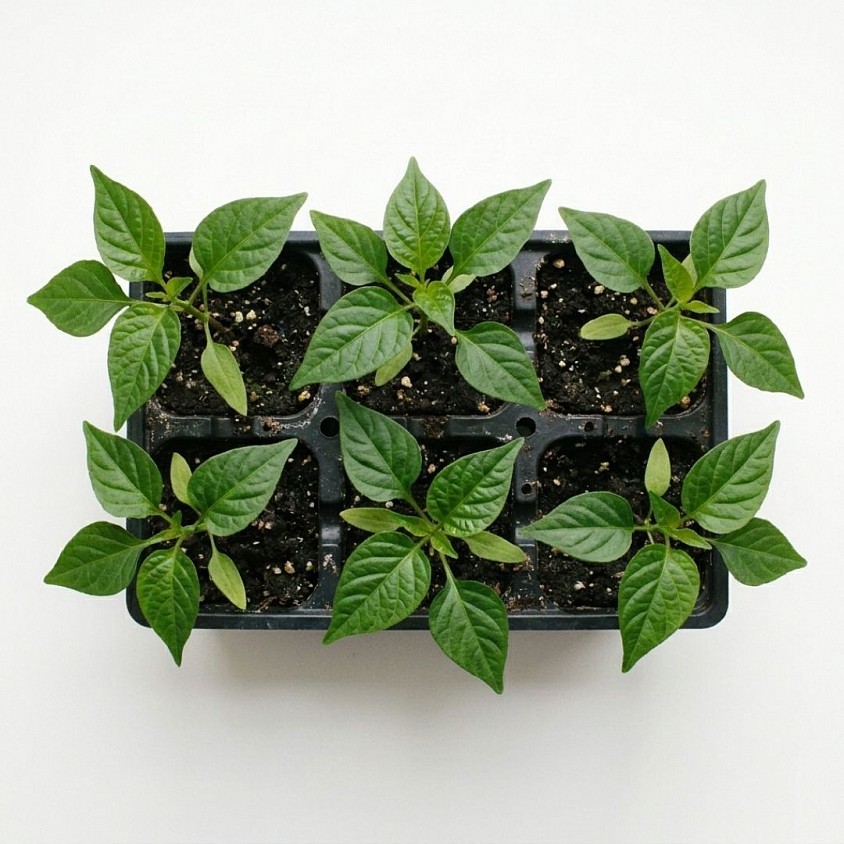
🟠 Transplanting: Late Spring to Early Summer (November to December), once seedlings reach 12–15 cm in height with 6–8 true leaves, and night-time ambient soil and air temperatures consistently stay above 15°C with all frost risk fully passed.
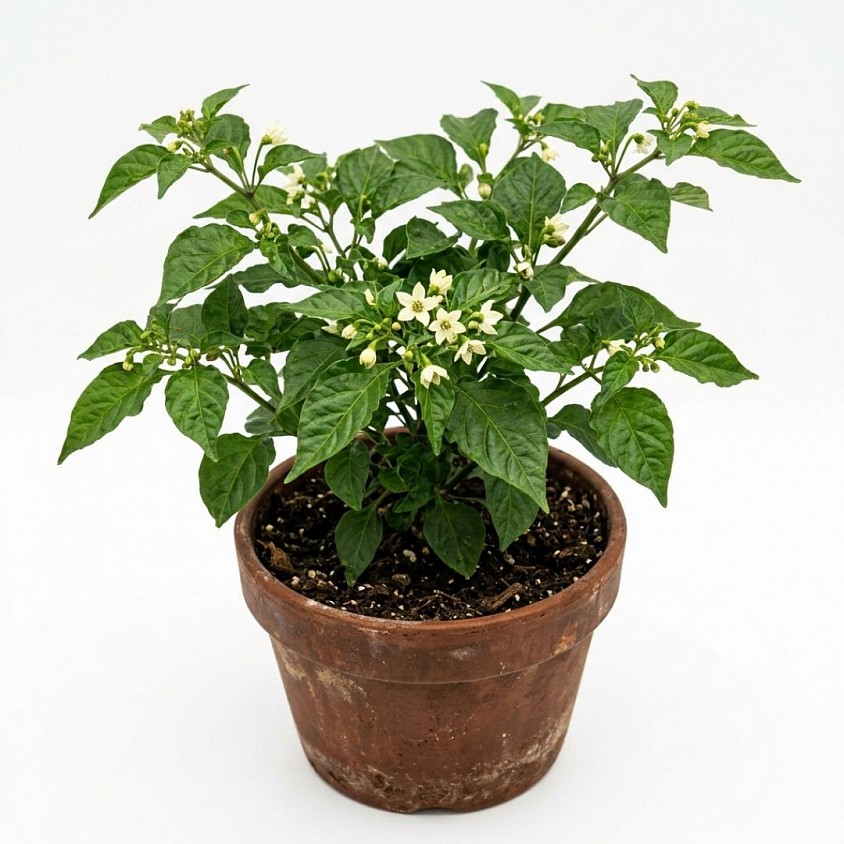
🟠 Flowering: Mid-Summer through Autumn (January to April). Small, greenish-white tubular flowers emerge at node junctions; flowering continues concurrently with pod development until ambient temperatures drop in late autumn.
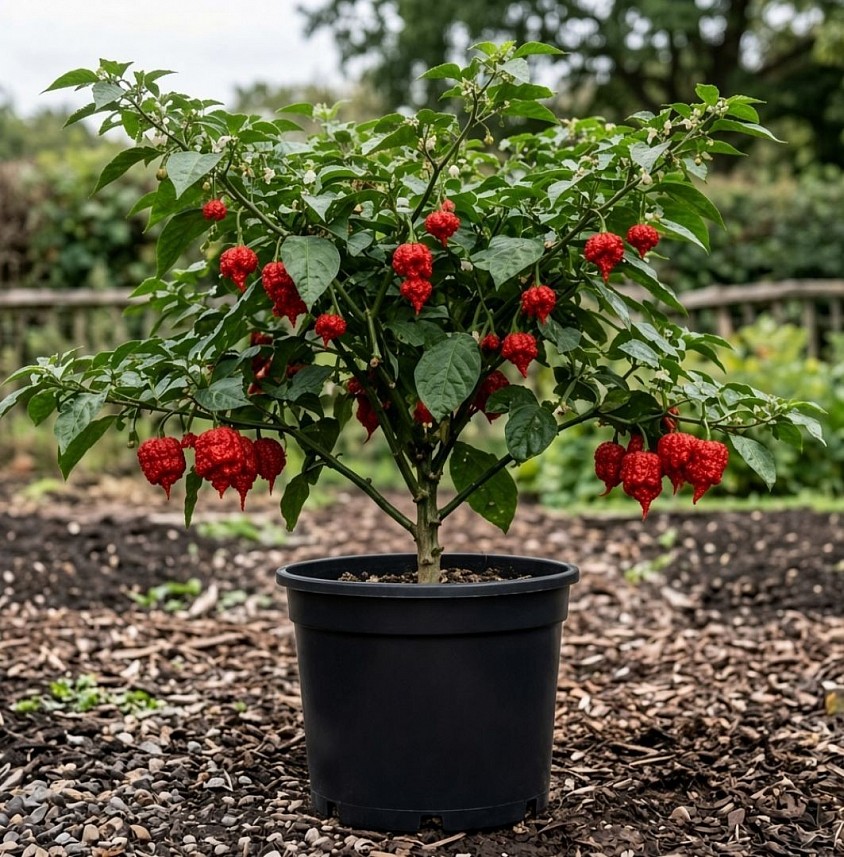
🟠 Harvesting: Late Summer through Late Autumn (February to May/June). Pods require an extended maturation period of 100 to 160 days post-transplanting to shift fully from vibrant lime green to their final mature, glossy fire-engine red state with maximum heat unit concentration (1,500,000 to 2,200,000+ SHU).
🟠 Best suited to: Warm, high-heat, and frost-free regions of South Africa, including the Bushveld, Lowveld (Limpopo and Mpumalanga), KwaZulu-Natal coastal belts, and summer-rainfall interior regions (Gauteng, North West, Free State). Requires full sun (minimum 6–8 hours of direct daily sunlight) and deep, well-draining, nutrient-rich soil.
Why Growers Choose The Complete Carolina Reaper Chilli Pepper Grow Kit
🌶️ Complete Super-Hot Cultivation Solution
Provides every specialized tool, mineral supplement, and nutrient needed to successfully germinate and grow Carolina Reaper Chilli Peppers without having to source hard-to-find components separately.
🌶️ Guaranteed Germination Environment
Features a specialized seed heating pad and mini humidity domes engineered to maintain the critical 28°C to 32°C root-zone temperature needed to break deep Capsicum chinense seed dormancy.
🌶️ Targeted Mineral & Cell-Wall Support
Includes dedicated Calcium Sulfate and Magnesium Sulfate packets specifically included to prevent blossom end rot, maximize chlorophyll synthesis, and support heavy, dense pod production.
🌶️ Genetic Purity & Seed Preservation
Equipped with breathable pollination isolation bags so growers can protect their blossoms from cross-pollination and harvest 100% pure seeds for future growing seasons.
🌶️ Dual-Phase Nutrition & Root System Care
Combines biodegradable root-safe peat pots with stage-specific high-phosphorus root starters and high-potassium structural boosters to ensure zero transplant shock and maximum heat resilience.
🌶️ Tailored South African Expert Manual
Includes an authoritative master guide packed with precise horticultural protocols tailored specifically to navigate South Africa's summer climate, light hours, and long growing cycles.
Buy The Complete Carolina Reaper Chilli Pepper Grow Kit


Basic Carolina Reaper Chilli Pepper Grow Kit
The Basic Carolina Reaper Grow Kit is the budget-friendly version of our Complete Carolina Reaper Grow Kit, created specifically for growers who want to cultivate the world's official hottest chilli pepper.
Designed for practical performance, this streamlined kit provides the core essentials required to successfully germinate and establish healthy Capsicum chinense plants at home.

What's Inside The Basic Carolina Reaper Chilli Pepper Grow Kit
✅ 5 × Carolina Reaper (Capsicum chinense) Seeds:
Premium, high-viability seeds of the world's hottest pepper, selected for extreme heat unit production (1,500,000 to 2,200,000+ SHU), iconic blistered pod texture, and signature scorpion-tail shape.
✅ 1× Germination Mix Packet (500g):
A master-blended, light substrate formulated for maximum aeration, optimal drainage, and uninhibited early root elongation.
✅ 5× Biodegradable Peat Pots:
Eco-friendly starter pots that promote natural air-pruning and eliminate transplant shock by letting you plant seedlings directly into their permanent growing positions.
✅ 5× Humidity Domes:
Domes designed to trap ambient moisture, stabilizing humidity levels to accelerate seed coat softening and uniform emergence.
✅ 1× Carolina Reaper Chilli Pepper Cultivation Manual:
An authoritative, step-by-step master guide packed with expert horticultural protocols tailored specifically for growing super-hot peppers in South African climate conditions.


Buy The Basic Carolina Reaper Chilli Pepper Grow Kit
How long does it take to grow Carolina Reapers from seed to harvest?
The complete growth cycle for the Carolina Reaper (Capsicum chinense) from seed germination to mature pod harvest spans 150 to 180 days (5 to 6 months) under warm-season growing conditions. The timeline initiates with an extended germination phase lasting between 14 and 35 days (2 to 5 weeks). Because the seeds possess deep physiological dormancy, uniform sprouting strictly depends on maintaining a steady root-zone temperature of 28°C to 32°C in a high-humidity propagation setup.
Following germination and transplanting outdoors once all frost risks have passed, plants require an additional 100 to 160 days to complete vegetative stem expansion, flower establishment, and pod maturation. Fruit set begins with green pod formation, but the development of maximum capsaicinoid density requires significant time; pods take upwards of 60 to 90 days from flower fertilization to transition fully from vibrant lime green to their mature, glossy fire-engine red state. Because of this extended 150-to-180-day cycle, sowing early in late winter to early spring (August to October in South Africa) to ensure peak pod ripening occurs prior to autumn temperature drops.
Why are my Carolina Reaper seeds taking so long to germinate?
The primary reason Carolina Reaper (Capsicum chinense) seeds delay or fail during germination is inadequate substrate temperature. As a tropical super-hot cultivar, Carolina Reaper seeds require a constant root-zone temperature between 28°C and 32°C to activate key metabolic enzymes, break physiological seed coat dormancy, and initiate cellular division. When seeds are exposed to fluctuating spring room temperatures or soil environments that drop below 20°C—particularly overnight—enzymatic activity slows down dramatically. Under cold or inconsistent thermal conditions, germination stalls, extending the typical 14-to-35-day emergence window into six weeks or causing the process to fail entirely.
Substrate Moisture Dynamics and Seed Coat Permeability
A second major factor leading to delayed emergence is improper moisture balance within the growing substrate. Carolina Reaper seed coats are dense and resistant to moisture absorption, requiring uniform, high-humidity surroundings to soften the outer pericarp and allow oxygen and water to enter the embryo. However, over-saturating the medium deprives the root zone of oxygen, leading to seed suffocation and fungal decay before the radicle can emerge. Conversely, allowing the top layer of media to dry out even temporarily during early imbibition causes embryo death or halts germination. To maintain optimal conditions without oversaturating the soil, using a light, aerated seed-starting mix enclosed within a sealed humidity dome under controlled heat.
Can Carolina Reaper plants survive frost and extreme summer heat?
As a tropical Capsicum chinense cultivar, the Carolina Reaper thrives under warm daytime temperatures between 27°C and 35°C when given full sun exposure. The plants demonstrate high thermal tolerance and can easily sustain summer heat waves up to 38°C, provided the root zone is kept moist with consistent deep watering and adequate substrate volume.
However, prolonged periods where ambient temperatures exceed 38°C disrupt normal reproductive functions. Under severe atmospheric heat, pollen viable life drops drastically, leading to temporary blossom abortion (flower drop) and delayed pod set. Once daytime temperatures moderate or temporary overhead shadecloth protection is introduced to cool the canopy, normal flower pollination and fruit setting resume naturally.
Survival Under Frost and Cold Conditions
Carolina Reaper plants are strictly frost-tender and cannot survive freezing or sub-zero conditions. Exposure to temperatures below 10°C induces severe metabolic stagnation, causing plant growth to stall, leaves to yellow, and developing floral buds to drop.
Direct sub-zero freezing temperatures (0°C or lower) cause water within the plant’s cellular vascular structure to expand and freeze, resulting in irreversible tissue collapse, cell rupture, and immediate plant mortality. In regions prone to winter frosts, growers must treat Carolina Reapers as protected warm-season crops: starting seeds early indoors under heated propagation conditions, transplanting only after all spring frost risks have passed, or cultivating plants in large movable containers (20–30L) to overwinter them in frost-free, heated enclosures.
What soil pH and container size do Carolina Reapers require?
Carolina Reaper plants require a light, friable, and exceptionally well-draining soil medium rich in organic matter. The optimal soil reaction for Capsicum chinense falls within a pH range of 6.0 to 6.8 (slightly acidic to neutral). Heavy clay or compacted soils restrict root expansion and cause water retention, which deprives the root zone of oxygen and leads to fungal root rot, nutrient lockout, and blossom abortion. Incorporating coarse river sand, perlite, or organic compost improves soil structure, aeration, and drainage while maintaining essential nutrient availability. Furthermore, maintaining balanced levels of phosphorus and calcium in the soil promotes robust root development and reinforces cell wall integrity, preventing conditions such as blossom end rot during high-yield fruiting phases.
Container Size and Aeration Requirements
When grown in containers, Carolina Reapers require adequate soil volume to support their extensive taproot and wide lateral root network. Agronomic propagation standards specify a minimum container capacity of 20 to 30 liters (approximately 30 to 40 cm in diameter and depth) per individual plant. Smaller containers restrict root volume, causing plants to become root-bound, which leads to stunted growth, early moisture stress, and diminished pod yields. Additionally, containers must feature multiple large drainage holes at the base to ensure excess water drains freely. Lightweight, high-porosity potting mixes supplemented with 20% to 30% perlite or vermiculite help retain an open root structure, preventing substrate compaction over long 150-to-180-day growth cycles.
Do I need more than one plant for pollination and pod set?
Carolina Reaper plants are fully self-fertile (self-compatible). A single isolated plant contains complete, hermaphroditic flowers with both male (anthers) and female (stigma) reproductive structures present within every individual blossom. Consequently, cross-pollination from a separate companion plant is not required for successful fertilization, seed development, or full fruit set.
Under normal outdoor growing conditions, open air movement, gentle breezes, and foraging insect pollinators (such as bees) dislodge and transfer pollen grains within the flower to achieve high pod production. If Carolina Reapers are cultivated in sheltered spaces—such as indoors, in greenhouses, or under protective exclusion netting—natural air currents may be restricted. In these enclosed environments, growers can easily facilitate maximum pollination by gently shaking or tapping the main stem and flowering branches during peak bloom to release pollen onto the stigma.
Can I overwinter a Carolina Reaper plant to keep it growing for multiple seasons?
Overwintering Capabilities and Perennial Growth Habit
The Carolina Reaper is fundamentally a short-lived perennial shrub, despite frequently being cultivated as an annual in cold climates. In its natural tropical environment, the plant does not die back after a single fruiting cycle and can remain productive for 3 to 5 years or longer when protected from freezing temperatures. Overwintering allows growers to bypass the lengthy 14-to-35-day seed germination and early seedling setup phase for the following year. An overwintered plant enters spring with an established, mature root system and thicker woody stems, allowing it to regenerate foliage rapidly, flower earlier in the season, and yield significantly higher pod quantities than first-year seedlings.
Agronomic Protocols for Winterizing and Canopy Management
To overwinter a Carolina Reaper successfully, official growing protocols require bringing the plant indoors into a frost-free environment before atmospheric temperatures drop below 10°C or first frost occurs. The plant undergoes a severe canopy reduction: the main stems are pruned back drastically, leaving a compact frame roughly 20 to 30 cm tall with limited structural branching, while all remaining leaves, unripened fruits, and floral buds are completely removed. This forces the plant into a semi-dormant metabolic state, reallocating stored energy strictly into root maintenance. During this dormant period, the container must be kept in a sheltered area with ambient temperatures maintained above 10°C. Irrigation must be drastically reduced to once every few weeks—only applying enough moisture to prevent the potting medium from drying out entirely—as dormant roots in cool soil cannot process excess water and are highly susceptible to fatal root rot. Once warm spring temperatures and extended daylight hours return, the plant can be transitioned back outdoors to resume active foliage expansion and early pod production.
