
Complete Brassica oleracea var. capitata 'Giant Drumhead' Cabbage Grow Kit
There’s nothing quite like the excitement of planting a tiny seed, nurturing it day by day, and watching it grow into an enormous, show-stopping Giant Drumhead Cabbage. This legendary heirloom variety has been treasured by gardeners for generations thanks to its incredible size, rich flavour, and impressive harvests.
Whether you're a first-time gardener, a passionate grow-your-own enthusiast, or looking for a fun and rewarding activity for the whole family, this kit turns gardening into an unforgettable experience. Children love watching the transformation from seed to giant vegetable, while adults enjoy the satisfaction of harvesting fresh, homegrown produce straight from the garden.
Your Giant Drumhead Cabbage Grow Kit includes everything you need to get started, making success easy, even for complete beginners. Simply plant, nurture, and watch nature work its magic.
Order your Giant Drumhead Cabbage Grow Kit today and start your growing adventure. One tiny seed could become the biggest and most rewarding cabbage you've ever seen!

What's Inside the Kit Giant Drumhead Cabbage Grow Kit?
✅ 10 × Brassica oleracea var. capitata 'Giant Drumhead' Cabbage Seeds:
Hand-selected, high-viability seeds sourced from heirloom lines. Engineered for massive growth potential, dense head formation, and yielding broad, tightly packed cabbages.
✅ 5 × Biodegradable Peat Pots:
Eco-friendly starter pots designed to prevent transplant shock. Taproots penetrate cleanly through the porous peat walls, enabling a seamless, damage-free transition directly into your garden beds or large containers.
✅ 1 × Premium Germination Mix Packet (500g):
A light, highly aerated, sterile propagation substrate formulated to retain ideal moisture, maximize root zone oxygenation, and guarantee high emergence rates during early seed starting.
✅ 1 × High-Phosphorus Feed Sachet (150g):
A targeted early-stage nutrient starter rich in bio-available phosphate to accelerate rapid taproot extension, strong root branching, and early structural leaf establishment.
✅ 1 × High-Potassium Feed Sachet (250g):
A specialized feeding formulation packed with soluble potassium to drive dense cellular expansion, firm head density, and maximum weight accumulation during peak growth.
✅ 1 × Master Giant Drumhead Cabbage Cultivation Manual:
A step-by-step, technically verified grower’s guide tailored to South African seasonal conditions.
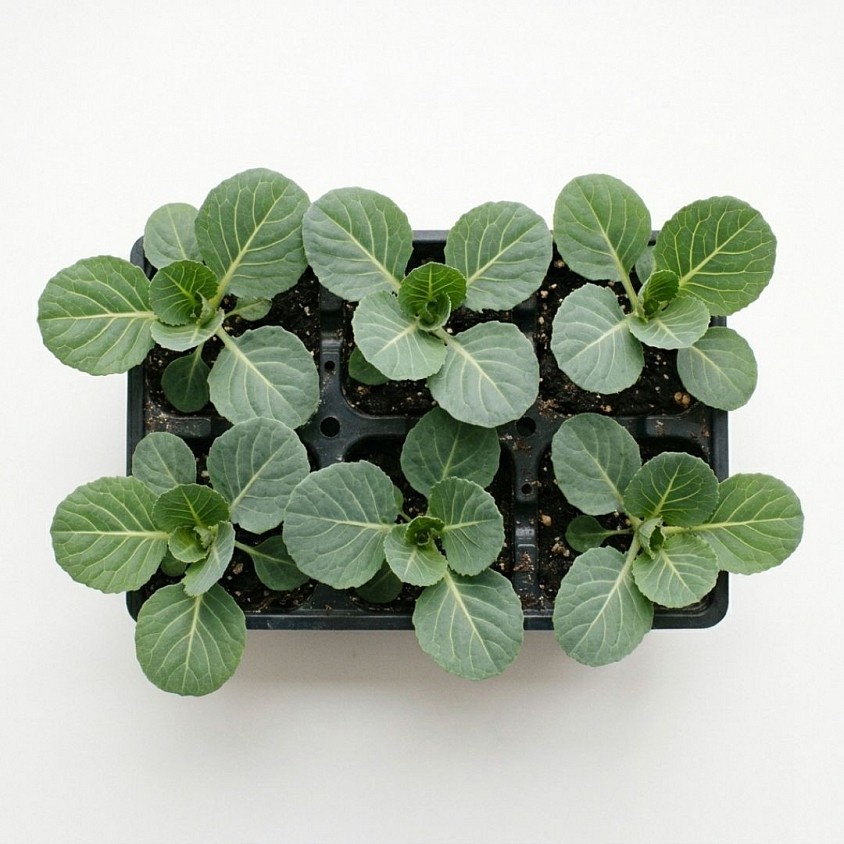
South African Sowing Calendar Dor The Giant Drumhead Cabbage
🟠 Sowing: July to August (spring crop), November, and January to March (late summer/autumn crop).
🟠 Germination: 7 to 14 days, requiring a consistent moisture level and ideal soil temperatures between 15°C and 20°C.
🟠 Transplanting: 4 to 6 weeks post-sowing when seedlings have developed 4 to 5 strong true leaves and stand 10 to 15 cm tall, spacing plants 40 to 60 cm apart in well-prepared soil.
🟠 Harvesting: 110 to 140 days from sowing (roughly 90 to 110 days after transplanting), cut early in the morning when the large flat heads feel firm, hard, and heavy.
🟠 Best Suited To: It thrives across South African temperate regions when timed to avoid harsh mid-winter frost spells (May to July) on the Highveld and extreme summer heat or high humidity in low-lying tropical areas.
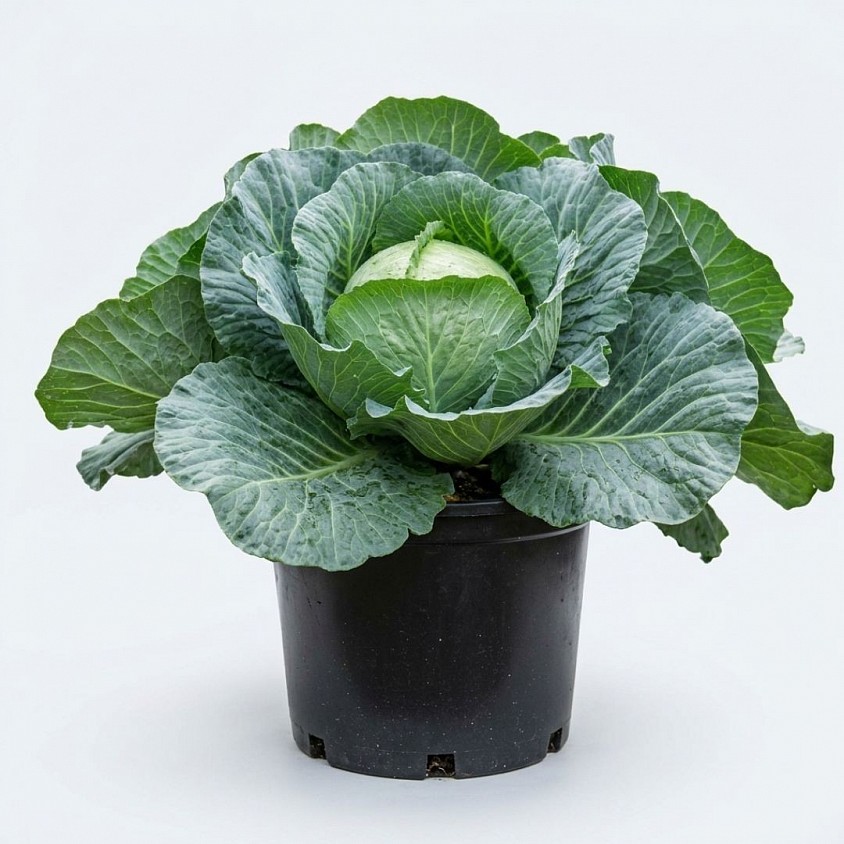
Why Growers Choose The Complete Giant Drumhead Cabbage Grow Kit
🥬 High-Density Yields:
Eliminates structural soft-heading by delivering stage-specific nutrients that force dense, tightly packed cellular expansion.
🥬 Zero-Failure Seedling Establishment:
Solves early propagation collapse through a sterile, high-porosity growth medium paired with shock-free root boundary technology.
🥬 Stage-Calibrated Agronomic Feeds:
Prevents early root stunting and late-stage nutrient deficiencies by supplying exact phosphorus and potassium ratios timed to critical growth phases.
🥬 South African Seasonal Precision:
Eliminates trial-and-error loss by aligning planting schedules precisely with local regional frost windows, heat stress limits, and soil chemistry.

Buy The Complete Giant Drumhead Cabbage Grow Kit


What is the ideal soil pH and nutrient requirement for Giant Drumhead Cabbage?
Brassica oleracea var. capitata 'Giant Drumhead' requires deep, well-drained soils with an optimal pH range of 6.5 to 7.0 (slightly acidic to neutral). Maintaining soil pH within this precise range is critical for maximum nutrient bioavailability and root efficiency. Soil pH levels falling below 6.0 severely impair the plant's ability to absorb essential macronutrients—particularly calcium and magnesium—while significantly increasing susceptibility to Plasmodiophora brassicae (clubroot disease), a soil-borne fungal pathogen that destroys brassica root architecture. In naturally acidic soils, agricultural lime must be incorporated prior to planting to elevate soil pH, stabilize root-zone chemistry, and supply structural calcium.
Stage-Specific Macronutrient Requirements
As a heavy-feeding exhibition crop, Giant Drumhead Cabbage demands high soil fertility and a carefully timed nutrient delivery strategy across its growth stages. During the initial root establishment and early vegetative propagation phase, the plant requires high levels of phosphorus to stimulate deep taproot extension and lateral root branching. Once established, heavy applications of nitrogen are necessary to build a broad frame of expansive outer wrapper leaves, which act as the photosynthetic engine for the plant. As head formation begins, nitrogen application must be regulated and paired with elevated levels of potassium, which regulates cellular water uptake and drives dense leaf packing and firm, heavy head accumulation without triggering premature head splitting.
How far apart should Giant Drumhead Cabbages be spaced?
Brassica oleracea var. capitata 'Giant Drumhead' requires an in-row spacing of 40 to 60 centimeters (approx. 16 to 24 inches) between individual plants, paired with a row separation of 60 to 75 centimeters. Because 'Giant Drumhead' is an heirloom variety bred for massive physical dimensions, its mature leaf canopy can spread up to 90 centimeters across. Providing this wide spatial buffer ensures that adjacent plants do not overlap frame leaves, allowing unimpeded solar interception for maximum photosynthetic efficiency across every individual cabbage.
Agronomic and Physiological Impact of Spacing
Restricting spacing below official agronomic recommendations directly compromises both crop health and final head weight. Dense planting forces cabbages to compete for available root volume, soil moisture, and essential macronutrients, which stalls leaf expansion and results in significantly smaller, lightweight heads. Furthermore, adequate spatial separation maintains continuous airflow through the lower plant canopy. This ventilation accelerates the drying of morning dew and irrigation moisture on the broad outer leaves, drastically lowering ambient humidity within the plant bed to suppress destructive fungal pathogens such as downy mildew (Peronospora parasitica) and black rot (Xanthomonas campestris).
Why is my Giant Drumhead Cabbage not forming a head?
Temperature Stress and Unfavorable Climatic Windows
Temperature stress is the primary environmental cause of non-heading in Brassica oleracea var. capitata 'Giant Drumhead'. Cabbage is a cool-season crop that initiates head formation—the cupping and tight folding of inner leaves—most effectively when ambient daytime temperatures remain consistently between 15°C and 21°C. Exposure to sustained high temperatures exceeding 24°C to 27°C during the early cupping phase disrupts the plant's hormonal signaling. Instead of curling inward to form a tight, solid core, the plant remains in a loose, vegetative growth state, continuously pushing outward frame leaves or accelerating stem elongation in preparation for premature bolting.
Nutrient Imbalances and Nitrogen Excess
Improper fertilization regimes severely impair head development. While nitrogen is essential during early establishment to build expansive outer wrapper leaves, excessive nitrogen applications during the mid-season cupping window stimulate rapid, lush, leaf expansion at the expense of structural head density. When nitrogen levels are disproportionately higher than available phosphorus and potassium, outer leaves grow rapidly while the central terminal bud fails to pack tightly. Potassium plays a pivotal role in cellular osmotic pressure and leaf density; a deficiency in available potassium prevents the inner leaves from firming up, leaving the cabbage as an open rosette of loose foliage.
Water Stress and Root System Interruptions
Inconsistent soil moisture directly halts the physiological transition from leaf expansion to head formation. Giant Drumhead Cabbage requires uniform, continuous moisture throughout its growth cycle to maintain the hydraulic pressure needed for dense leaf packing. Extended drought periods or irregular irrigation cycles cause cell expansion in the growing tip to stall. Similarly, severe transplant shock, root damage from deep cultivation, or root restriction from improper container sizing can permanently stunt the plant's vascular development, preventing it from uptaking the massive water and nutrient volumes required to form a heavy, solid head.
Why do cabbage heads split, and how can I prevent it?
Physiological Causes of Cabbage Head Splitting
Rapid, internal hydraulic pressure surges as the primary physiological cause of head splitting in Brassica oleracea var. capitata 'Giant Drumhead'. Once a cabbage head completes its initial cupping phase and forms a firm, densely packed core, its outer leaves lose much of their elasticity. If the plant experiences a sudden, heavy intake of water—typically caused by heavy rainfall or erratic irrigation after a dry period—the extensive root system rapidly forces moisture up into the head. Because the hardened outer leaves cannot stretch quickly enough to accommodate the sudden increase in internal volume and cellular expansion, the internal hydraulic tension tears the head open, often exposing the inner core to decay and pests.
Agronomic Prevention Protocols
To prevent head splitting, maintaining strict, uniform soil moisture levels throughout the entire growth cycle. Employing drip irrigation paired with organic mulching stabilizes root-zone hydration and prevents the sharp soil moisture fluctuations that trigger internal pressure surges. Additionally, nitrogen applications must be curtailed once head formation is well underway; excess nitrogen during late growth forces rapid, soft cell growth that weakens leaf wall structure.
If heavy rain is forecasted when cabbages have reached full maturity and solidity, growers can perform a technique known as root pruning. By severing a portion of the secondary root system—either by pulling the plant slightly upward or inserting a spade into the soil on one side of the root ball—water absorption capacity is temporarily reduced, preventing the sudden surge of moisture into the head until harvest can take place. Finally, harvesting cabbages promptly as soon as heads feel completely solid and firm eliminates the risk of over-maturity splits.
How much water does a Giant Drumhead Cabbage require?
Early Propagation and Vegetative Water Requirements
Commercial seed suppliers and university agricultural extension manuals specify that Brassica oleracea var. capitata 'Giant Drumhead' requires consistent, moderate soil moisture during its germination and early transplant establishment phases. During the initial 4 to 6 weeks in propagation, the seedbed or starter substrate must remain evenly moist, as drying out halts germination while waterlogging starves young roots of oxygen. Following field transplanting, young cabbages require approximately 25 to 30 millimeters of water per week, delivered through light, frequent irrigation to establish deep taproot architecture and expand the broad outer frame leaves.
Peak Head Formation Water Demands
During the intensive head-packing phase (roughly 60 to 110 days post-transplant), a mature Giant Drumhead plant undergoes massive cellular expansion, requiring maximum daily water volume. Agronomic research documents that during peak growth under warm conditions, a single mature plant absorbs between 3 and 5 liters of water per day. To sustain this volumetric growth and build heavy, dense heads weighing upwards of 10 to 15 kg, overall field irrigation must provide 35 to 50 millimeters of water per week across the entire root zone, adjusted for ambient temperature and evapotranspiration rates.
Irrigation Protocols and Splitting Risk Management
Official cultivation standards dictate that water must be applied strictly to the soil base using drip lines or root drenches rather than high-pressure overhead sprinklers. Wetting the broad inner leaf rosette creates trapped moisture pockets, dramatically increasing the incidence of fungal leaf spots, downy mildew, and bacterial soft rot. Furthermore, soil hydration must remain exceptionally uniform. Allowing the root zone to dry out followed by a heavy application of water creates a sudden internal hydraulic surge within the plant, causing the dense inner leaves to swell faster than the outer leaves can stretch, which results in catastrophic head splitting.
What temperature causes Giant Drumhead Cabbage to bolt (go to seed)?
Physiological Mechanism of Vernalization and Temperature Thresholds
Temperature-induced vernalization is the primary trigger for premature bolting (going to seed) in Brassica oleracea var. capitata 'Giant Drumhead'. Bolting occurs when young plants pass out of their juvenile phase—typically defined as having a stem diameter greater than 6 millimeters or possessing 6 to 8 true leaves—and are exposed to prolonged low ambient temperatures. The physiological threshold for vernalization in cabbage is sustained exposure to temperatures below 10°C, with maximum reproductive stimulation occurring between 4°C and 8°C for a period of 3 to 6 consecutive weeks.
Environmental Triggers and Reproductive Transition
Once the cold requirement is satisfied, rising temperatures and expanding day lengths in late winter or early spring signal the plant to transition from vegetative growth to a reproductive cycle. Instead of tightly folding inner leaves to form a solid, marketable head, the growing point inside the cabbage crown rapidly elongates. The stem pushes up through the center of the plant to produce a tall seed stalk bearing yellow flowers. If cold spells below 10°C hit immature crops prematurely, the hormonal shift causes the plant to bypass head formation entirely, resulting in complete crop loss for head production.
Agronomic Prevention and Seasonal Timing
To prevent premature bolting, commercial growing guidelines stress precise planting calendars calibrated to local climate zones. In regions with severe winter freezes or sudden spring cold snaps, seeds should not be transplanted into open ground too early in the season when extended temperatures below 10°C are likely. Additionally, selecting slow-bolting heirloom strains, maintaining steady irrigation, and ensuring balanced, non-stressed seedling growth reduce the physiological stress factors that accelerate flowering stem initiation.
How do I protect Giant Drumhead Cabbage from common pests like aphids and cabbage worms?
Exclusion Barriers and Cultural Management
Official agricultural extension standards and commercial IPM (Integrated Pest Management) guidelines emphasize exclusion netting as the primary line of defense against cabbage worms, diamondback moth larvae, and brassica pests. Installing ultra-fine mesh netting over crops immediately after transplanting prevents adult white butterflies and moths from laying eggs on the undersides of leaves. Additionally, field sanitation—such as removing crop debris post-harvest and destroying wild mustard weeds along planting borders—eliminates overwintering sites and alternate host plants for cabbage aphids (Brevicoryne brassicae). Monitoring crop borders twice weekly allows growers to identify early aphid colonies before they penetrate the tight inner wrapper leaves, where chemical and biological sprays become far less effective.
Targeted Biological Controls for Chewing Caterpillars
For chewing pests such as cabbage loopers and imported cabbageworms, biological control using Bacillus thuringiensis subsp. kurstaki (Bt) is recommended. Bt is a naturally occurring soil bacterium that, when ingested by caterpillars during feeding, releases proteins that disrupt the insect’s digestive tract, causing it to stop feeding within hours. Because Bt target-specificity leaves beneficial predators—such as lady beetles, syrphid fly larvae, and parasitic wasps (Trichogramma)—unharmed, it preserves natural ecological suppression of secondary pests. To maximize efficacy, applications should be sprayed at dusk or during overcast weather, as solar ultraviolet radiation rapidly degrades the active bacterial proteins.
Soft-Bodied Pest Management and Contact Controls
Controlling cabbage aphids requires targeted foliar sprays that break down the insect's protective waxy coating without destroying the crop's natural leaf wax. Agronomic guidelines specify using high-potency insecticidal soaps or botanical extracts (such as azadirachtin or refined neem oil) targeted at the undersides of leaves where aphid colonies aggregate. Sprays must achieve complete coverage to contact the aphids directly, as these products rely on smothering rather than systemic residual action. Applications should take place during cooler evening hours to prevent leaf scorch (phytotoxicity) and maintain beneficial predator populations, such as Diaeretiella rapae parasitic wasps, which assist in maintaining long-term biological control.
