
Complete Goji Berry (Lycium chinense) Grow Kit
Growing your own goji berries has never been easier. Our Complete Goji Berry Grow Kit contains everything you need to start cultivating these nutrient-rich superfruits at home, whether you're an experienced gardener or a complete beginner. Each kit is carefully assembled to give your plants the best possible start and help you enjoy a successful harvest season after season.
Goji berry plants are prized for their vibrant red berries, which are packed with antioxidants, vitamins, and minerals. With the right care, your plants can provide a rewarding supply of fresh berries for smoothies, snacks, teas, and healthy recipes.
Goji berries thrive in sunny locations and are well-suited for gardens, patios, balconies, and even larger containers. As the plants mature, they produce attractive green foliage, delicate purple flowers, and clusters of bright berries, making them a beautiful and productive addition to any growing space.
Whether you're looking to grow your own superfoods, enjoy a rewarding gardening project, or give a unique gift to a gardening enthusiast, this kit makes the perfect choice. Everything is included to help you start growing with confidence and enjoy the satisfaction of harvesting your own homegrown goji berries.
You can buy the kit now and begin your goji berry growing journey today.

What’s Included in Your Complete Goji Berry Grow Kit?
✅ 20× Goji Berry (Lycium chinense) Seeds:
Premium, high-viability seeds selected to produce abundant crops of nutrient-dense, antioxidant-rich superfood berries right in your home garden.
✅ 5× Biodegradable Coir Pots:
Eco-friendly starter pots crafted from natural coconut coir that promote air-pruning and eliminate transplant shock by planting directly into the ground or larger containers.
✅ 1× Germination Mix Packet (500g):
A master-blended, light substrate engineered for superior aeration, optimal moisture retention, and fast root initiation.
✅ 5× Mini Humidity Domes:
Clear domes that lock in essential humidity and warmth to create an ideal microclimate for rapid seedling emergence.
✅ 1× High-Phosphorus Feed Sachet (150g):
A targeted starter plant food designed to ignite explosive early root elongation and build a strong, healthy seedling structure.
✅ 1× High-Potassium Feed Sachet (200g):
A premium structural booster formulated to strengthen stem walls, enhance heat and drought tolerance, and build a resilient root-to-leaf water transport system.
✅ 1× Soil pH Buffer Sachet (100g):
A specialized mineral amendment to optimize soil chemistry, ensuring your growing medium maintains the slightly alkaline pH range preferred by Goji plants for peak nutrient uptake.
✅ 1× Packet of Plant Ties:
Soft, flexible ties designed to train young vines, secure arching branches, and support heavy fruiting canes without damaging stems.
✅ 1× Spray Bottle:
A fine-mist pressure sprayer that provides gentle, even hydration without washing away delicate surface-sown seeds or disturbing fine root systems.
✅ 5× Plant Markers:
Durable, weatherproof labels to easily organize your planting dates and keep your growing setup neatly tracked.
✅ 1× Goji Berry Cultivation Manual:
An authoritative, step-by-step master guide packed with expert horticultural protocols tailored specifically to successful cultivation in the South African climate.
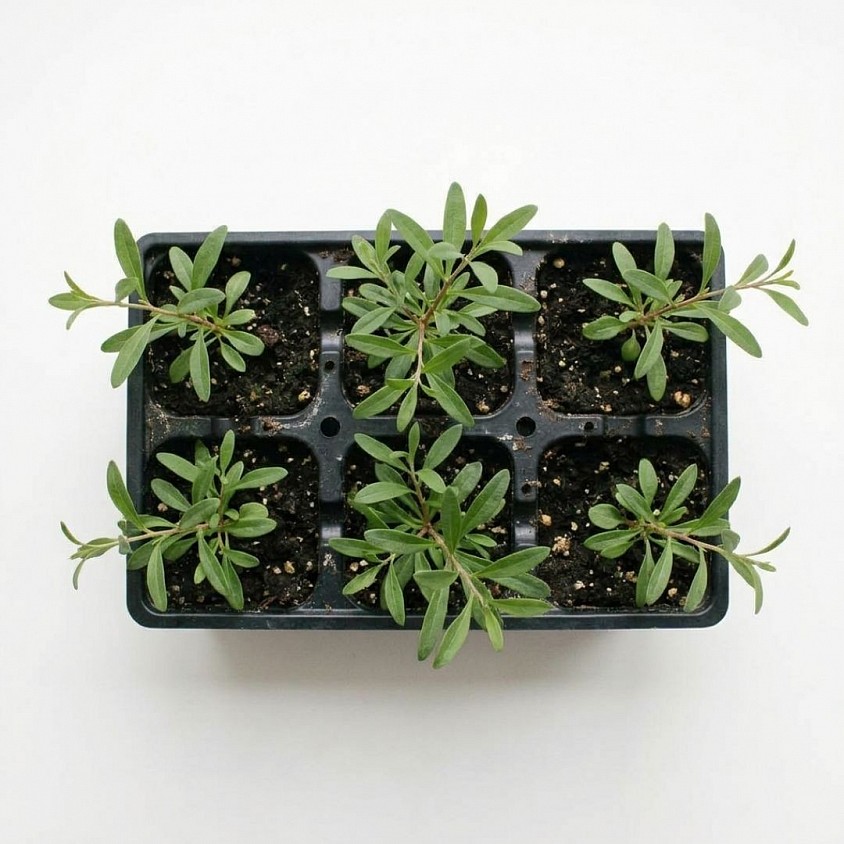
South African Sowing Calendar for Goji Berries (Lycium chinense)
🟠 Sowing: Late Winter to Early Spring (August to October) under protected germination conditions indoors or in heat-regulated seed propagation trays (20°C to 25°C), following a mandatory 12- to 24-hour warm-water pre-sow seed soak.
🟠 Germination: 14 to 30 days (2 to 4 weeks), contingent on a shallow sowing depth (3mm to 6mm) in a light, well-aerated propagation medium kept consistently moist under bright indirect light.
🟠 Transplanting: Late Spring to Early Summer (October to December) once seedlings reach 10–15 cm in height, develop 4–6 true leaves, and all seasonal frost risks have passed.
🟠 Flowering: Early Summer through Late Summer (November to February). Small purple-to-lavender tubular blossoms emerge along new lateral branch shoots.
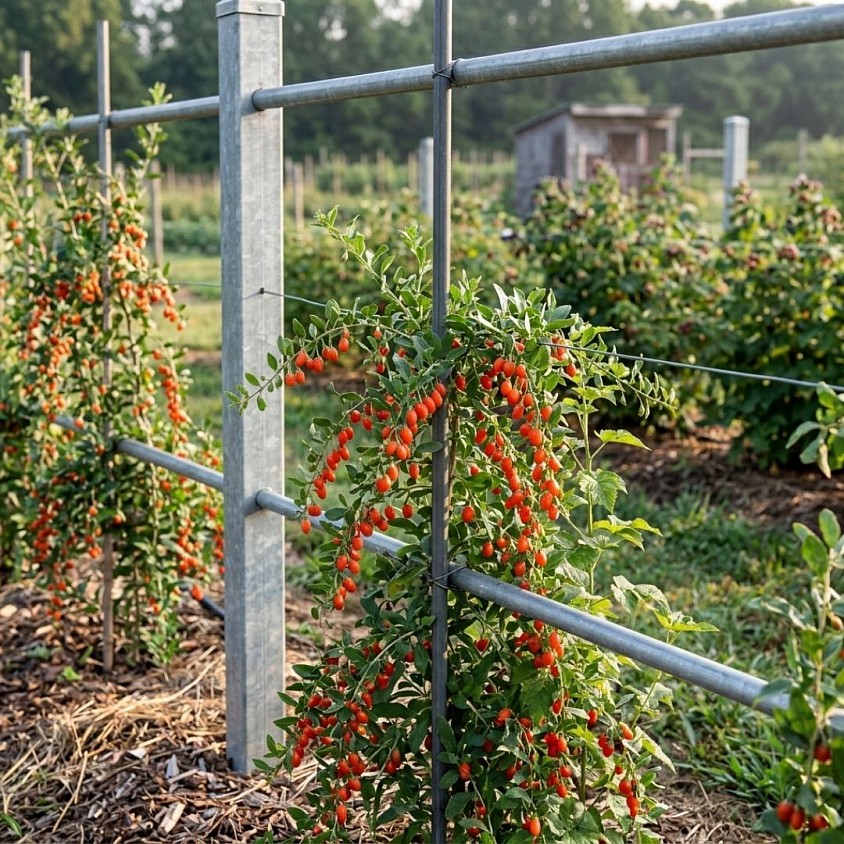
🟠 Harvesting: (established plants) Late Summer to Late Autumn (February to May). Berries turn a deep red-orange colour when fully mature and are harvested by hand when soft and yielding. (Note: Seed-grown shrubs typically produce their first full crops starting in their 2nd or 3rd season).
🟠 Best suited to: Highly adaptable across diverse South African climate zones, including Arid & Semi-Arid Inland Regions (Karoo, Northern Cape, Free State Highveld), Summer Rainfall Interior Zones (Gauteng, North West, Mpumalanga), and Moderate Coastal & Oceanic Belts (Western Cape, Eastern Cape). Requires full sun (minimum 6 hours daily) and well-draining neutral to slightly alkaline soil.
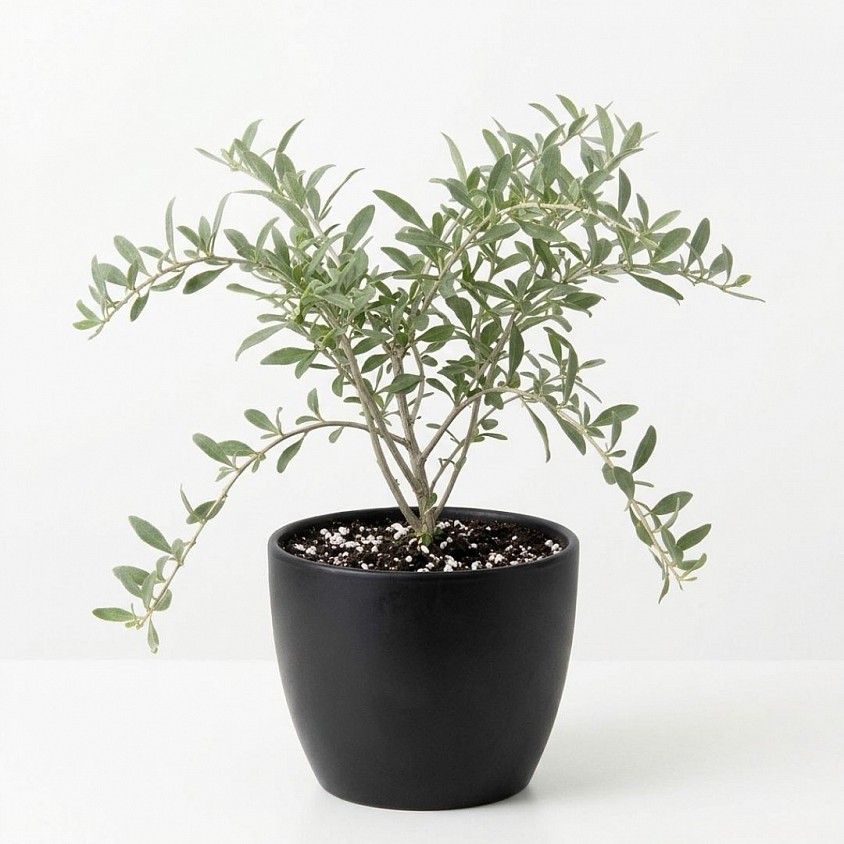
Why Growers Choose the Complete Goji Berry Grow Kit
🍒 Complete All-in-One Superfood Growing System
This comprehensive kit provides every specialized component required to cultivate nutrient-dense Goji berries from seed to maturity without the hassle of sourcing specialized soils, feeds, or setup tools separately.
🍒 Premium High-Viability Seed Genetics
Includes 20 carefully selected Lycium chinense seeds chosen for their exceptional germination rates and strong adaptability to South African growing conditions.
🍒 Optimized Soil Chemistry & pH Balance
Features a custom soil pH buffer sachet alongside a high-aeration germination mix to effortlessly establish and maintain the slightly alkaline soil environment Goji berries demand for peak nutrient absorption.
🍒 Targeted Stage-Specific Plant Nutrition
Equipped with dual-phase feeds—a high-phosphorus starter formula to ignite explosive early root elongation and a high-potassium structural booster to build thick stems and extreme drought tolerance.
🍒 Root-Safe & Microclimate-Controlled Germination Setup
Combines biodegradable coir pots and mini humidity domes to create the ideal high-humidity sprouting environment while completely eliminating transplant shock when potting on.
🍒 Tailored South African Expert Guidance
Includes an authoritative step-by-step master manual paired with soft plant ties and precision spray tools designed specifically to help local growers navigate South Africa's heat, light, and seasonal cycles.
Buy The Complete Goji Berry Grow Kit


Basic Goji Berry Grow Kit
The Basic Goji Berry Grow Kit is the budget-friendly version of our Complete Goji Berry Grow Kit, designed specifically for gardeners who want authentic, high-yielding results without extra setup costs.
Streamlined for practicality and performance, this kit focuses strictly on the core essentials required to germinate and establish healthy Lycium chinense plants successfully at home.

What’s Included in Your Basic Goji Berry Grow Kit?
✅ 20× Goji Berry (Lycium chinense) Seeds:
Premium, high-viability seeds selected to produce abundant crops of nutrient-dense, antioxidant-rich superfood berries right in your home garden.
✅ 5× Biodegradable Coir Pots:
Eco-friendly starter pots crafted from natural coconut coir that promote air-pruning and eliminate transplant shock by planting directly into the ground or larger containers.
✅ 1× Germination Mix Packet (500g):
A master-blended, light substrate engineered for superior aeration, optimal moisture retention, and fast root initiation.
✅ 5× Mini Humidity Domes:
Clear domes that lock in essential humidity and warmth to create an ideal microclimate for rapid seedling emergence.
✅ 5× Plant Markers:
Durable, weatherproof labels to easily organize your planting dates and keep your growing setup neatly tracked.
✅ 1× Basic Goji Berry Cultivation Manual:
An authoritative, step-by-step basic guide packed with expert horticultural protocols tailored specifically to successful cultivation in the South African climate.
Buy The Basic Goji Berry Grow Kit


Can Goji Berries survive the South African heat and frost?
Goji berry plants exhibit extreme physiological hardiness, making them exceptionally well-adapted to the climatic spectrum of South Africa. As a deciduous woody shrub native to arid and semi-arid regions, Lycium chinense can endure cold extremes down to -20°C to -26°C during winter dormancy. Severe sub-zero temperatures and heavy frosts across the South African Highveld (Gauteng, Free State, and Mpumalanga) cause mature plants to shed their leaves and enter winter dormancy without structural cellular or root damage. When spring temperatures rise, plants break dormancy cleanly and initiate aggressive foliage growth on both old wood and new main stems.
In terms of heat and drought tolerance, Goji berries thrive under intense high-sunlight conditions and elevated summer temperatures up to 37°C to 40°C. Their thick leaf cuticle and efficient stomatal control allow established shrubs to handle low atmospheric humidity and periodic moisture deficit in dry interior belts like the Karoo, Northern Cape, and North West province. In humid coastal zones—such as the KwaZulu-Natal coastline—the primary challenge is not heat, but excess moisture and still air. In these regions, planting in freely draining, neutral-to-alkaline soil (pH 6.8 - 8.1) combined with full sun exposure and open air circulation is vital to prevent fungal foliar diseases like powdery mildew during peak summer rains.
How long does it take for Goji Berry plants to produce fruit?
The timeline for a Goji berry plant to enter its fruiting phase depends primarily on whether the shrub is established from seed or propagated vegetatively. When grown directly from seed, Lycium chinense undergoes an extended juvenile vegetative phase while building its root framework and crown structure. Seed-grown plants typically yield their first small harvest of fruit in their second or third year (24 to 36 months post-germination). During the first 12 to 18 months, the plant concentrates its energy on main stem elongation, lateral shoot branching, and taproot establishment, producing only sparse scattered blossoms that rarely set full crop loads until the second full growing season.
Can I grow Goji Berries in containers/pots?
Goji berries (Lycium chinense) adapt exceptionally well to container cultivation, provided specific structural and drainage requirements are met. Because Goji plants develop an extensive root architecture and can reach 2 to 3 meters in height at maturity, long-term container success depends on selecting large containers with a minimum capacity of 30 to 50 liters (approximately 40 to 50 cm in diameter and depth). The container must feature multiple large drainage holes at the base to prevent water accumulation, as Goji roots are highly sensitive to waterlogging and anaerobic root rot.
The substrate composition is a critical factor for container-grown plants. Unlike standard peat-based potting mixes that retain excessive moisture and tend to become acidic over time, container media for Goji berries must be open, gritty, and exceptionally well-draining. Recommended formulations mix high-grade potting soil with 25% to 30% coarse river sand, perlite, or fine gravel to simulate their native arid soil conditions and maintain a neutral-to-slightly-alkaline pH. Containerized plants also require a sturdy central stake or small trellis integrated directly into the pot to train upward growth and support heavy fruiting branches.
Because pot-bound root systems dry out faster and have limited access to ground minerals, container-grown Goji berries require deliberate watering and nutrient protocols. Soil should be allowed to dry slightly between waterings, followed by deep saturation until excess water drains freely from the base. To sustain vigorous growth without spurring excessive leaf foliage at the expense of root and stem development, containerized plants benefit from balanced, low-nitrogen fertilizer applications during spring and summer, supplemented with potassium and micronutrients to support health and structural stability.
Do I need more than one Goji Berry plant for pollination?
Goji berry plants (Lycium chinense and Lycium barbarum) are self-fertile (self-compatible). A single isolated plant possesses perfect, hermaphroditic flowers containing both functioning male (stamens) and female (pistil) reproductive organs, enabling it to successfully self-pollinate, set fruit, and produce viable seeds without requiring a second cross-pollination partner. Pollination occurs primarily via wind movement and insect pollinators, such as honeybees and native solitary bees, which transfer pollen within the individual flower or across blossoms on the same shrub. However, commercial orchard trials and horticultural propagation data indicate that planting multiple Goji shrubs in close proximity increases overall bee activity and cross-pollination rates, leading to higher fruit set percentages, larger average berry size, and more uniform yields per plant.
How often should I water and fertilize Goji plants?
Irrigation and fertilization protocols for Lycium chinense must strictly align with the plant's growth stage and natural physiology. During the germination and early seedling phase, the substrate must be kept consistently moist with fine misting, never allowing the upper soil layer to dry out completely. Once seedlings transition to juvenile establishment in larger pots or field soil, watering should occur 1 to 2 times per week, allowing the top 2 to 3 cm of soil to dry out between applications to encourage deep taproot expansion. Established mature shrubs are highly drought-tolerant; they require deep watering once every 7 to 14 days during dry hot periods, while completely suspending supplemental irrigation during dormant winter months to prevent root rot.
Fertilization must be applied judiciously, as excess nitrogen causes rampant vegetative growth, weak leggy stems, and reduced fruit set. During the initial spring flush, apply a balanced starter fertilizer or high-phosphorus feed to stimulate root development and main stem hardening. Throughout the active growing season (spring to early autumn), feed young plants once every 3 to 4 weeks with a low-nitrogen, high-potassium formula enriched with trace minerals to fortify cell wall structure, optimize turgor pressure, and enhance environmental stress tolerance. Fertilization must cease entirely by mid-autumn to allow the plant to naturally harden off before winter dormancy.
How and when should I prune Goji Berry bushes?
Systematic pruning is essential for controlling the naturally sprawling growth habit of Lycium chinense, encouraging robust structural branching, and maximizing light penetration throughout the canopy. Because Goji berries produce flowers and fruit primarily on new lateral shoots originating from one-year-old wood, unpruned bushes develop dense, tangled branches with poor air circulation, reducing harvest efficiency and increasing vulnerability to foliar fungal diseases.
🍒 Timing of Pruning
Dormant Winter Pruning (Main Pruning):
The primary structural pruning must be conducted during late winter (July to August in the Southern Hemisphere) while the plant is completely dormant before new bud break occurs.
Summer Maintenance & Tipping:
Selective summer pruning is performed throughout active growth (November to January) to control vigorous upright shoots and encourage productive side branching.
🍒 Pruning Protocols by Plant Age
First Year (Structural Establishment):
Select a single, strong central shoot to serve as the main trunk, removing all secondary sucker growth from the lower 30 to 40 cm of the stem. Once the main leader reaches a height of 50 to 60 cm, pinch or head back the growing tip. This apical topping breaks dominance and forces the plant to produce 4 to 6 strong lateral branches (scaffold branches), creating a sturdy canopy frame.
Second Year Onward (Canopy Maintenance & Renewal):
During the dormant winter phase, head back lateral scaffold branches by roughly one-third of their length to stimulate dense, fruit-bearing side shoots. Remove all vertical "water sprouts" (fast-growing, non-fruiting shoots originating from the base or inner branches), dead, diseased, or crossing wood, and low-growing branches that touch the ground. Maintain an open center within the canopy umbrella to allow full sun penetration and optimal airflow.
Summer Branching & Pinching:
During late spring and early summer, pinch back new side shoots when they reach 30 to 40 cm in length. This encourages tertiary branching, increasing total flowering nodes and resulting in a higher density of fruiting wood for the upcoming harvest season.
