Klein Karoo Grow Kits - Blog Page
What Soil pH and Growing Conditions Do Goji Berries Need in South Africa?
Goji berries are renowned globally as a nutrient-dense superfood. While many South African gardeners assume these berries require delicate greenhouse environments or damp, acidic berry conditions like blueberries, the reality is quite the opposite. Originating from the arid, alkaline regions of northwestern China, goji berry plants are remarkably tough, drought-tolerant, and exceptionally well-suited to South Africa’s diverse climate. Whether you are growing goji plants in the Highveld, the Karoo, KwaZulu-Natal, or the Western Cape, understanding their soil and climate requirements is essential for a heavy harvest.
🍒 The Ideal Soil pH Range and Local Adjustments
Unlike blueberries or azaleas that thrive in acidic conditions, goji berries perform best in neutral to slightly alkaline soil with a pH range between 6.8 and 8.1. In the inland regions, Highveld, and Karoo, South African soils are often naturally neutral to slightly alkaline, meaning goji bushes usually require minimal to no pH adjustment. However, in winter-rainfall and coastal areas where soils tend to be naturally acidic, growers should incorporate agricultural lime or dolomitic lime into the top thirty centimeters of soil a few weeks before planting to lift the pH level. Acidifying additives like peat moss, pine needles, or sulfur-heavy fertilizers should be completely avoided as they lower soil pH and stunt plant development.
🍒 Soil Structure, Texture, and Drainage Requirements
The fastest way to damage a goji berry plant is poor drainage and standing water. In their native habitats, gojis grow along dry riverbanks and gravelly slopes, making light, free-draining soil mandatory. Ideal soil textures include sandy loam, gravelly loam, or well-draining light clay. When planting directly into heavy clay soils, building a raised bed or heavily amending the area with coarse river sand, fine gravel, and well-rotted compost is necessary to break up soil compaction. Well-decomposed compost or aged kraal manure improves soil fertility without overloading the plant with nitrogen, which would otherwise promote heavy foliage at the expense of fruit production.
🍒 Sunlight Demands and Extreme Climate Resilience
Goji berries require full sun exposure, needing at least six to eight hours of direct daily sunlight to produce abundant crops and stay free from powdery mildew. These rugged deciduous shrubs display remarkable resilience under intense South African summer heat, easily enduring temperatures above thirty-eight degrees Celsius. At the same time, established plants are exceptionally frost-hardy and can withstand freezing winter conditions down to fifteen degrees below zero. Across the Highveld and Free State, plants naturally drop their leaves and enter winter dormancy before emerging rapidly when warm spring weather arrives.
🍒 Watering Practices and Irrigation Management
Although young goji plants require consistent moisture during their initial six months of establishment, mature bushes are drought-resistant. During the first growing season, deep watering two to three times a week allows root systems to anchor effectively while giving the top few centimeters of soil time to dry out between waterings. In summer-rainfall provinces, supplemental watering is rarely needed during mid-summer rainy periods, provided beds do not collect standing water after intense thunderstorms. In winter-rainfall areas, growers must ensure garden beds maintain clear drainage pathways so root systems do not sit in cold, saturated ground throughout wet winter months.
🍒 Plant Nutrition and Container Culture Options
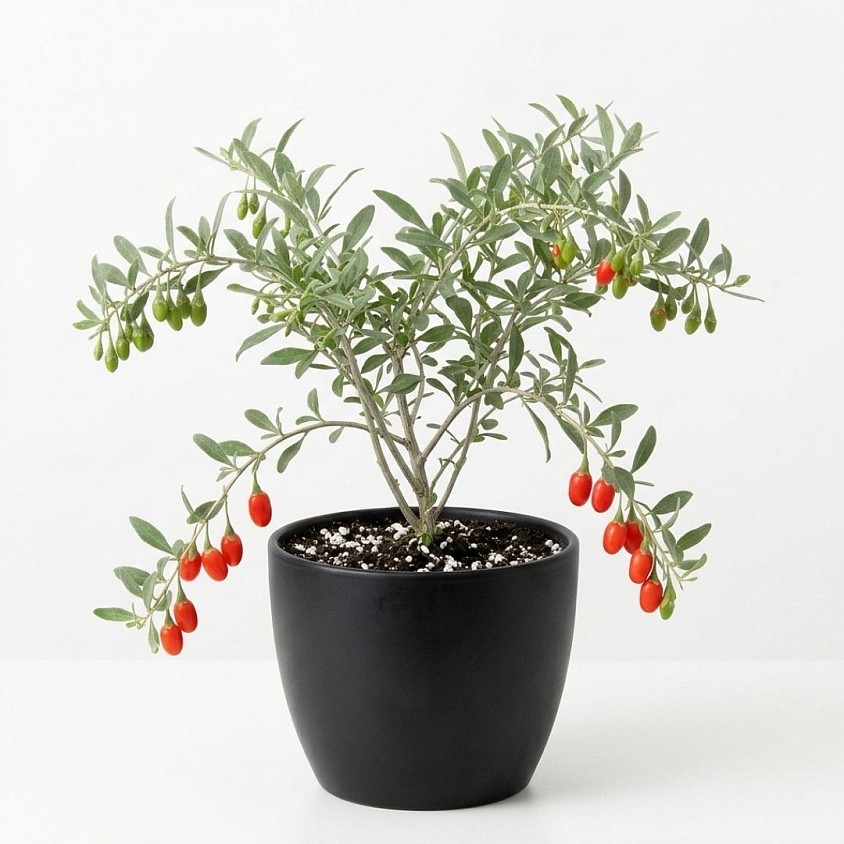
Goji berries require modest feeding, as over-fertilizing with nitrogen leads to excessive leaf growth and lower flower production. Applying a moderate layer of rich organic compost around the drip line in early spring alongside a balanced slow-release organic fertilizer supplies all necessary spring nutrients. As flowering and fruit set begin in mid-summer, applying a high-potassium organic fertilizer boosts fruit sweetness and berry yields. For gardeners with heavy clay or acidic garden soil, goji berries adapt exceptionally well to large pots holding at least thirty to forty liters. Combining standard potting soil with thirty percent coarse river sand ensures fast drainage and ideal root health.
How Long Does It Take for a Goji Berry Plant to Bear Fruit in South Africa?
Growing goji berries in South Africa has become an exciting project for home gardeners, homesteaders, and commercial growers alike. Renowned for their high antioxidant levels and superfood status, these hardy shrubs adapt remarkably well to South Africa's sunny climate. However, one of the most common questions new growers ask before planting is how long they will need to wait before harvesting their first fresh crop of vibrant red berries. The exact timeline depends largely on how you propagate your plant, local seasonal climate cycles, and early plant management.
🍒 Expected Timeline Based on Propagation Method
The method used to start your goji berry plant plays the primary role in determining your harvest timeline. If you start goji berries from seed, you can expect your first light harvest during the second or third year, with full berry production taking three to four years as the plant establishes a sturdy, woody framework. Conversely, growing from rooted cuttings or buying potted nursery bushes significantly accelerates the process. Established potted plants often yield a small introductory crop in their very first summer after planting, reaching peak commercial yields by their third year in the ground.
🍒 South African Seasonal Growth and Fruiting Cycles
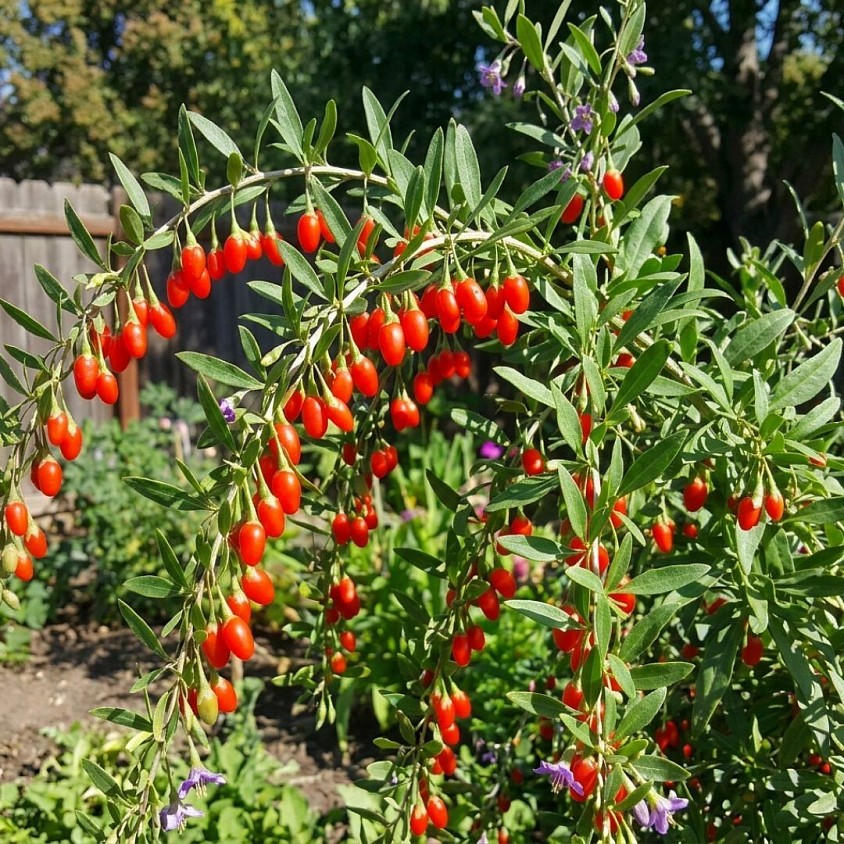
In South Africa, goji berries follow a distinct seasonal pattern tied to temperature and daylight hours. The plants wake up from winter dormancy in early spring, rapidly pushing out fresh green foliage followed by small purple and white flowers from late spring through summer. Berry production begins in mid-to-late summer, usually around December or January, and continues continuously into autumn until the first winter frosts arrive. In warmer frost-free coastal regions like KwaZulu-Natal or the lowveld, the fruiting season can extend even longer into the cooler months.
🍒 Key Factors That Accelerate Fruit Production
To ensure your goji plants start fruiting as quickly as possible, several key growing conditions must be met. Planting in a full-sun location with at least six to eight hours of direct sunlight daily is essential for stimulating floral buds. Soil drainage also plays a crucial role, as soggy roots stunt overall growth and delay flower formation. During the early establishment phase, light pruning encourages branching, which dramatically increases potential fruiting sites, as goji berries produce their heaviest yields on new growth created during the current season.
🍒 Managing Early Harvests for Long-Term Yields
While it is tempting to maximize berry output in the first year, allowing a young plant to focus its energy on root and stem development pays massive dividends later. Pinching off early blooms on very young stem cuttings during their first spring allows the shrub to direct resources into building strong roots and sturdy branches. By year three, a single well-cared-for goji bush in South African soil can yield several kilograms of fresh berries each season, continuing to produce reliably for fifteen to twenty years.
When Is Goji Berry Harvest Season in South Africa?
Growing goji berries (Lycium Chinense) in South Africa provides home gardeners and smallholders with direct access to a highly nutritious superfood. However, timing your harvest correctly is vital, as these vibrant red berries develop their natural sweetness only when fully ripened on the vine. Understanding the local harvest window and regional seasonal factors helps ensure you pick the berries at peak flavor and nutritional quality.
🍒 The Core Harvest Window: Mid-Summer Through Autumn
In South Africa, the goji berry harvest season typically spans from mid-summer through late autumn, running roughly from January to April or early May. Following winter dormancy, goji bushes wake up in spring to produce fresh foliage and small purple blossoms from late spring into early summer. Once pollinated, these flowers give way to young green fruits that swell and ripen into bright crimson berries as summer reaches its peak. Because goji plants flower continuously throughout the warm weather, you will often find flowers, green unripe fruit, and fully ripe red berries on the same bush simultaneously.
🍒 Regional Climate Variations Across South Africa
The exact start and duration of the harvest season vary slightly depending on your specific region and local macroclimate. In hot inland areas with high summer rainfall, such as Gauteng, Mpumalanga, and the Free State, fruit setting begins rapidly during warm December days, with heavy harvesting lasting until autumn's first severe frosts trigger leaf drop. In coastal or milder frost-free areas like KwaZulu-Natal and parts of the Lowveld, the harvest period can extend deeper into late autumn or early winter, as moderate temperatures allow continuous fruiting. In the Mediterranean climate of the Western Cape, the main crop develops steadily through the warm, dry late summer months into autumn.
🍒 Recognizing Ripe Berries and Harvesting Techniques
Knowing precisely when to pick goji berries requires monitoring their color, texture, and ease of separation. A fully ripe goji berry transitions from orange-red to a deep, saturated crimson along its entire length. Ripe berries yield slightly to gentle pressure and release easily from the stem with a soft twist or pull. Because fresh goji berries are delicate and can discolor or turn black if bruised heavily during picking, many growers place a clean cloth or sheet under the bush and gently shake the branches to collect the naturally ripe fruit without damaging the skins.
🍒 Post-Harvest Handling, Drying, and Storage
Freshly picked goji berries can be enjoyed raw straight from the bush or stored in the refrigerator for up to a week. Because fresh berries have a high moisture content and a short shelf life, preserving your mid-summer to autumn yield is popular across South Africa. Sun-drying the berries on raised mesh trays under hot autumn sun—or dehydrating them at low temperatures around thirty-five degrees Celsius—preserves their nutrients and transforms them into a chewy, raisin-like consistency suitable for year-round storage in airtight containers.
Can Goji Berries Survive Frost, Drought, and High Heat in South Africa?
South Africa is famous for its extreme weather variations, ranging from scorching summer heatwaves and dry spells in the interior to severe sub-zero winter frosts across the Highveld and Karoo. For gardeners and small-scale farmers looking to introduce new fruiting plants, weather resilience is often the single biggest deciding factor. Fortunately, goji berries (*Lycium barbarum* and *Lycium chinense*) are among the most climate-resilient fruit-bearing shrubs in the world, making them exceptionally well-suited to South Africa's harsher environmental conditions.
🍒 Thriving in Intense Summer Heat and Heatwaves
Goji berries originate from the semi-arid steppe and desert fringes of northwestern China, where summer temperatures frequently soar. In South Africa, these plants handle high summer heat exceptionally well. Even when temperatures exceed thirty-eight degrees Celsius during peak summer in regions like the Northern Cape, Free State, or Limpopo, established goji bushes continue to photosynthesize efficiently without suffering heat scorch or flower drop, provided their root zone has access to deep moisture. Their small, narrow, waxy leaves naturally minimize water loss through transpiration, allowing them to remain vibrant and green throughout intense sunny periods.
🍒 Outstanding Winter Frost Hardiness
One of the most remarkable characteristics of the goji berry plant is its extraordinary frost tolerance. Established goji bushes can withstand extreme dropping temperatures down to fifteen degrees below zero without structural damage. As autumn concludes across the cold inland regions of South Africa, goji berries enter a natural period of winter dormancy. The plant intentionally drops all its foliage and concentrates its reserves in its hardy root system and thick stems. Severe Highveld black frosts, morning glazes, and sub-zero night temperatures will not kill the plant. When spring warm-up begins in September, dormant buds burst back to life with vigorous new shoots.
🍒 Exceptional Drought Resilience Once Established
While young seedlings require regular moisture during their first six months in the ground, mature goji berry bushes develop deep, extensive taproot systems that make them remarkably drought-tolerant. In dry inland provinces or during unexpected mid-summer dry spells, an established goji bush can endure extended periods without supplemental watering. The plant conserves moisture by temporarily slowing top growth until water becomes available again. While consistent moisture during flowering and fruit set encourages maximum berry yield and size, the bush itself will easily survive prolonged dry conditions that would kill more sensitive fruit trees like citrus or avocado.
🍒 Managing Extreme Weather for Maximum Fruit Yield
Although goji berries possess natural survival mechanisms for heat, frost, and drought, implementing basic orchard management optimizes their fruit production across South Africa. Mulching around the base of the plant with a thick layer of organic material insulates root systems against surface soil overheating in mid-summer while reducing evaporation losses. Deep, infrequent watering during dry periods keeps the deep taproots active during flowering. In high-humidity coastal zones with intense heat, planting goji bushes in open, breezy areas ensures rapid drying of leaves after rain, preventing fungal diseases like powdery mildew.
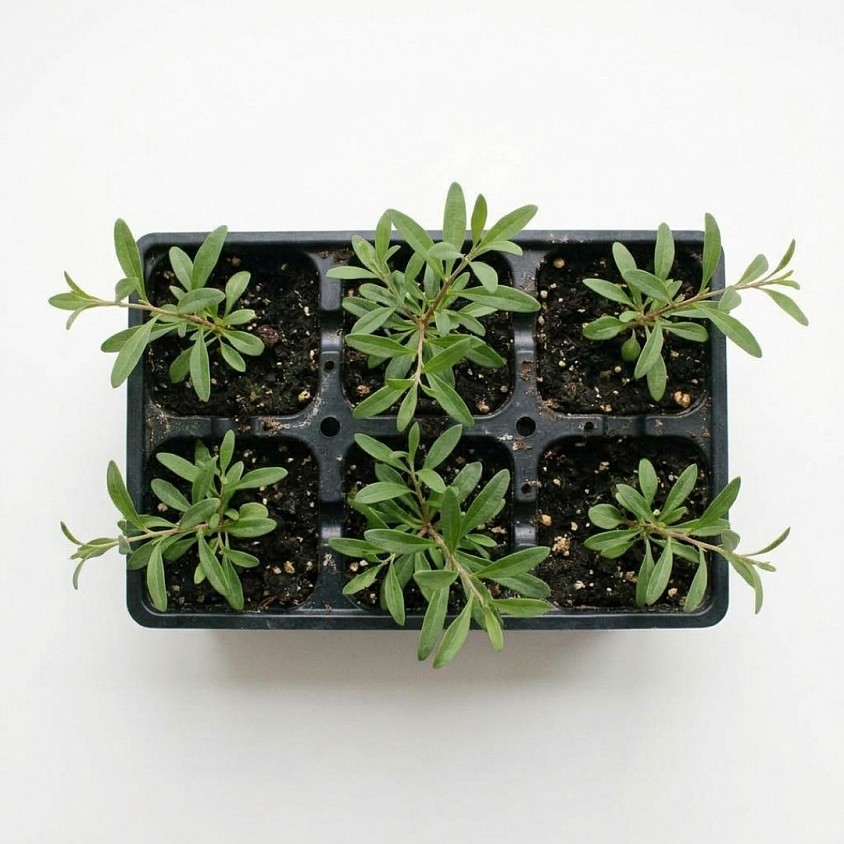
How Do You Dry Fresh Goji Berries at Home?
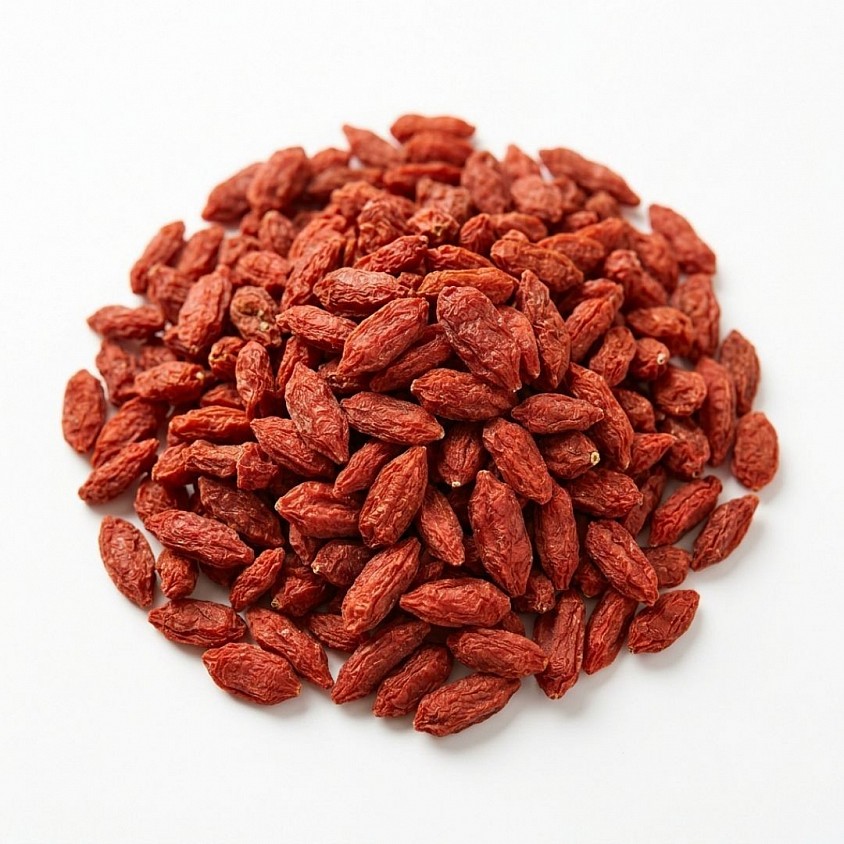
Harvesting fresh goji berries from your garden is a rewarding experience, but because these sweet, delicate berries have a soft skin and high moisture content, they spoil quickly at room temperature. Drying fresh goji berries is the traditional and most effective method to preserve their dense nutritional content, antioxidants, and sweet-tart flavor for year-round use. Whether you choose natural sun-drying or a controlled dehydrator method, properly preparing and drying your harvest ensures a long shelf life without sacrificing quality.
🍒 Preparing and Handling Fresh Goji Berries Before Drying
The preparation phase is critical to preventing your goji berries from turning black or spoiling during the drying process. Fresh goji berries are exceptionally tender and react to bruising by oxidizing rapidly. When picking, gently detach the berries from their stems or shake them onto a soft, clean sheet placed beneath the plant. Avoid washing fresh goji berries with water right before drying whenever possible, as excess surface moisture softens the skin and dramatically increases the risk of mold growth. If washing is necessary to remove dust, gently rinse them in cool water and blot them completely dry with paper towels before proceeding.
🍒 The Traditional Sun-Drying Method
Sun-drying is the classic, low-cost approach to preserving goji berries, relying on warm ambient temperatures, low humidity, and good air circulation. To sun-dry your harvest, spread the freshly picked berries in a single layer on food-grade stainless steel mesh screens or wooden drying racks elevated off the ground. Place the racks in a bright, direct sunlight location that receives continuous warm airflow. Cover the trays with a breathable cheesecloth or fine netting to protect the fruit from insects and birds. Depending on daily heat and humidity levels, full sun-drying typically takes four to seven days. Bring the trays indoors each evening to prevent nighttime humidity and dew from reintroducing moisture into the berries.
🍒 The Food Dehydrator Method for Precise Drying
For consistent results without relying on ideal outdoor weather conditions, using an electric food dehydrator is the most reliable method. Arrange the clean, unbruised goji berries in a single layer on your dehydrator trays, ensuring that individual berries do not touch so air can circulate freely around each piece. Set the dehydrator temperature to thirty-five to forty degrees Celsius. Maintaining a low temperature is crucial, as high heat cooks the berries, degrades temperature-sensitive antioxidants, and causes the natural sugars to caramelize. Dehydrating at low temperatures generally takes between twelve and twenty-four hours, depending on berry size and humidity.
🍒 Checking for Readiness and Storing Your Dried Harvest
Knowing when your goji berries are fully dried guarantees they will store safely without developing mold. A properly dried goji berry should feel firm, pliable, and leathery, similar to a traditional raisin, without any sticky wetness when squeezed between your fingers. If squeezed berries yield liquid or stick together heavily, they require additional drying time. Once fully dried, allow the berries to cool completely to room temperature before sealing them into airtight glass jars or food-grade storage containers. Stored in a cool, dark pantry away from direct heat and light, home-dried goji berries will maintain their flavor and nutritional potency for up to a year.
Do You Need a Trellis or Support Stake for Goji Berry Bushes?
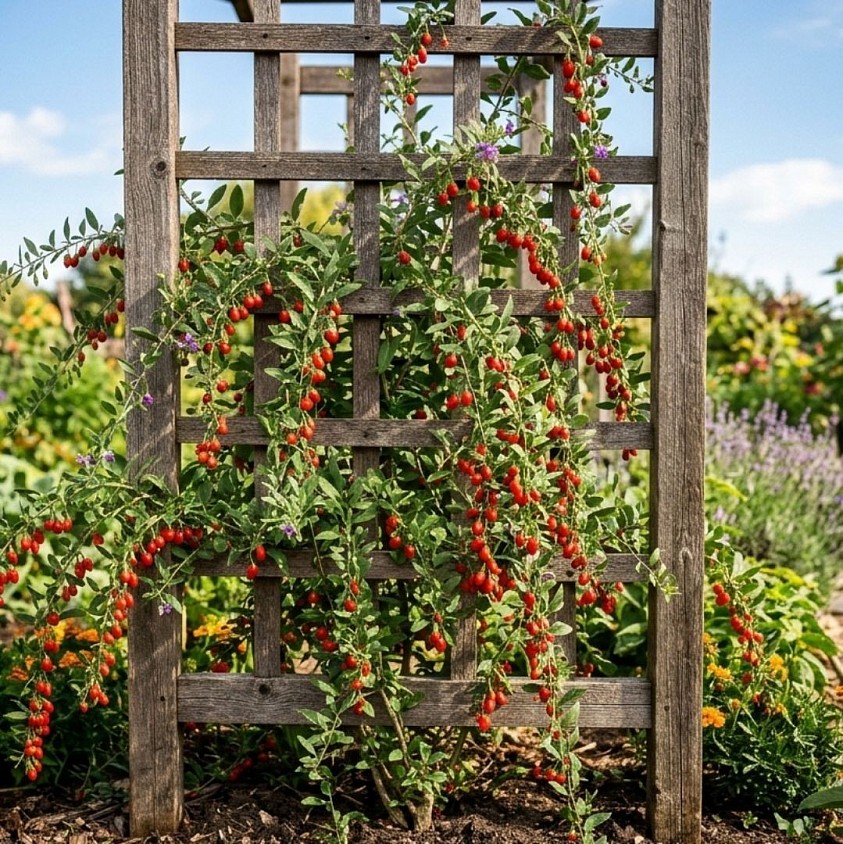
When planting goji berries, many gardeners expect them to grow like neat, upright fruit bushes such as blueberries or redcurrants. However, goji plants exhibit a vine-like, sprawling growth habit with long, flexible canes that naturally arch toward the ground under the weight of foliage and fruit. While a goji berry plant can technically survive without structural support, utilizing a trellis, fence, or support stake is highly recommended for maintaining plant health, maximizing berry yields, and making harvesting significantly easier.
🍒 How Goji Berries Grow and Why Support Matters
In their wild state, goji berries grow as rambling shrubs that spread across the ground, often forming dense, untamed thickets. As young canes grow rapidly during the spring and summer, they become heavy with leaves, flowers, and developing berries. Without support, these long, thin branches bend downward until the fruit sits directly on or near the soil. Fruit contact with wet ground dramatically increases the risk of fungal infections, fruit rot, and pest damage from soil-dwelling insects. Supporting the branches keeps the fruit clean, improves air circulation through the canopy, and ensures every part of the plant receives maximum sunlight for optimal berry ripening.
🍒 Trellising Options and Support Systems
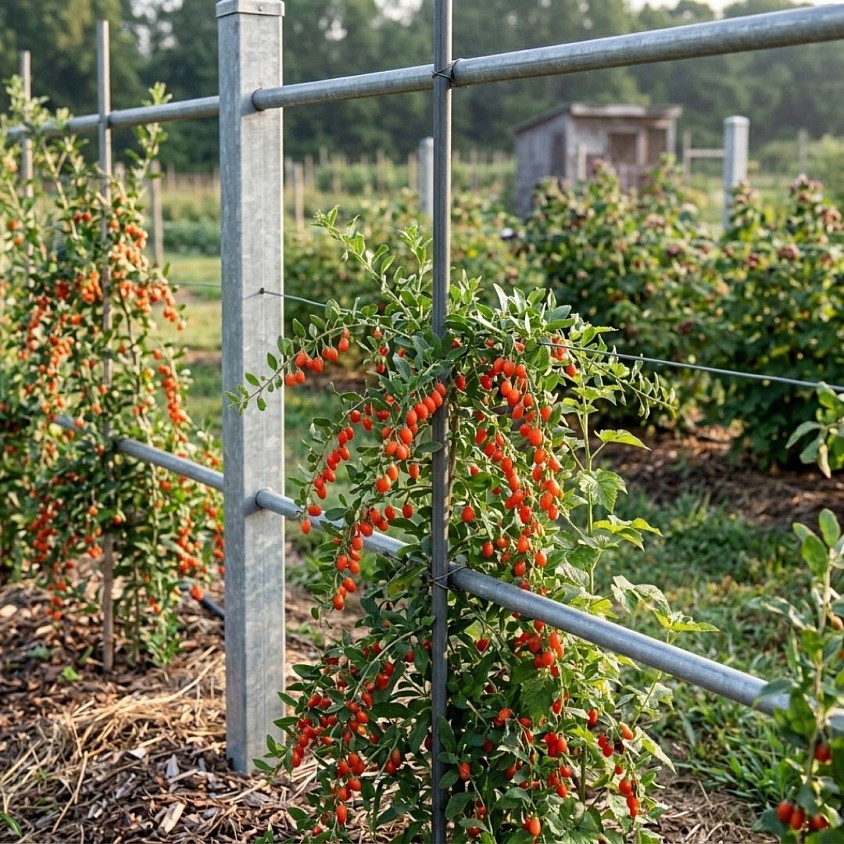
Several different support systems can be used depending on whether you are growing goji berries in garden beds, along fence lines, or in containers. A simple wooden or bamboo stake works well for young plants or container-grown bushes, allowing you to train a single main stem into a sturdy central trunk up to a height of one meter before letting top branches canopy outwards. For row plantings or larger garden plots, a two-wire or T-post trellis system—similar to those used for blackberries or grapes—is ideal. Securing the main canes to horizontal wires at heights of one meter and one and a half meters spreads out the growth, creating an organized, vertical fruiting wall.
🍒 Training and Pruning for Vertical Growth
Proper training works hand-in-hand with structural support to turn a sprawling goji vine into a productive, manageable bush. During the first growing season, select one or two strong main stems to tie loosely to your stake or trellis using flexible soft plant ties. As these main stems reach your desired height, pinch back the growing tips to encourage lateral side branching. Because goji berries produce their heaviest crops on new growth that shoots off older stems, regular summer pruning combined with secure trellising creates a clear trunk structure while exposing new fruiting wood to full sunlight.
🍒 Benefits for Harvesting and Long-Term Maintenance
Beyond health and production benefits, supporting your goji bushes changes the harvesting experience. Goji berries are soft, delicate, and often surrounded by sharp thorns hidden along the stems. Trying to harvest berries from a wild, unsupported tangle of thorny branches at ground level is difficult and often leads to bruised fruit. A well-trellised plant positions the ripening berries at a comfortable standing height, allowing you to easily inspect the crop, prune out dead wood, and harvest undamaged berries quickly throughout the summer and autumn fruiting season.
Can You Grow Kiwi Fruit in South Africa?
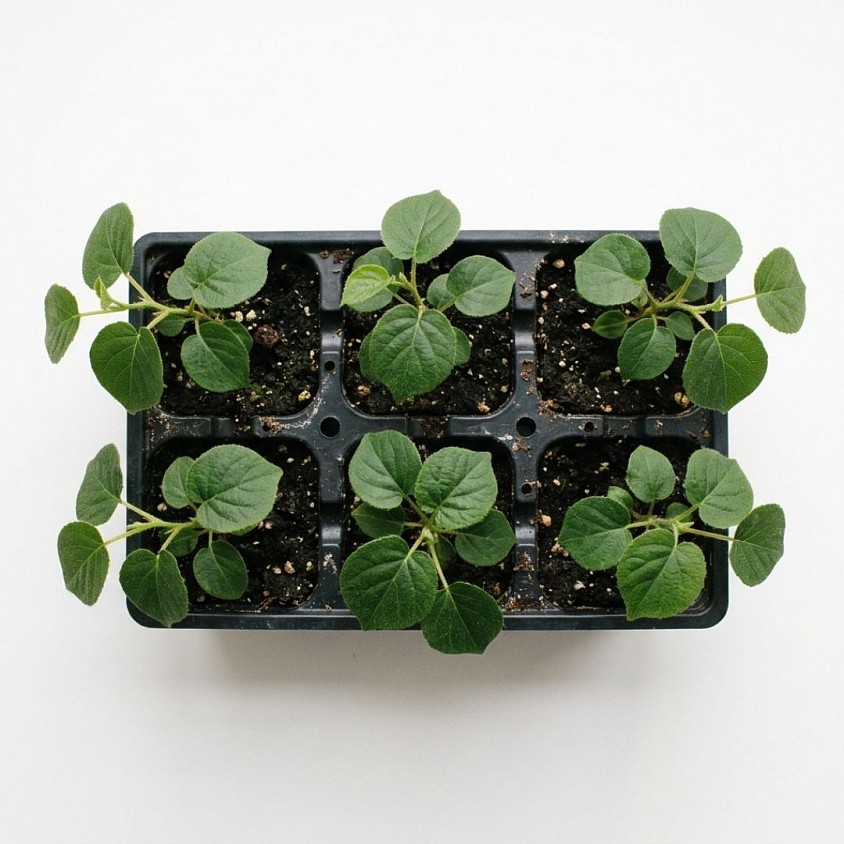
Kiwi fruit (*Actinidia deliciosa* and *Actinidia chinensis*) is a highly popular and lucrative fruit crop globally, prized for its high vitamin content and refreshing taste. While many consumers think of New Zealand or Italy when considering kiwi production, South Africa has a thriving, expanding commercial kiwi industry alongside ideal conditions for home gardeners. Thanks to South Africa's diverse microclimates, growing high-quality green and yellow kiwi fruit is not only possible but increasingly successful across several key regions.
🥝 Ideal Climatic Regions in South Africa
Kiwi vines are deciduous plants that require specific climatic conditions to thrive, including a defined winter chilling period to break dormancy and a long, warm growing season for fruit development. In South Africa, the primary commercial production areas are concentrated in regions that meet these specific thermal requirements. High-altitude and frost-tolerant zones with cool winters—such as the mist belt areas of Mpumalanga, Limpopo, the KwaZulu-Natal Midlands, and parts of the Western Cape—provide the ideal environment. These areas offer sufficient winter chill units while maintaining warm summer days necessary to sweeten the fruit before harvest.
🥝 Pollination and Plant Requirements
One crucial biological factor every South African grower must understand is that kiwi plants are dioecious, meaning individual plants are strictly male or female. To achieve fruit production, you must plant both male and female vines in close proximity, as only female vines produce fruit after being pollinated by male flowers. In home gardens and commercial orchards alike, a standard ratio is to plant one male vine for every six to eight female vines. Honeybees and wind are the main pollinators, so planting vines in sunny, open areas protected from severe prevailing winds helps ensure effective pollen transfer during spring.
🥝 Soil, Water, and Site Selection
Kiwi vines are vigorous climbers with deep, sensitive root systems that demand specific soil conditions. They perform best in rich, deep, well-draining soils with a neutral to slightly acidic pH between 5.5 and 6.5. Water management is critical in South Africa's warm climate, as kiwi plants have large leaves that transpire rapidly during summer heat. Regular, deep irrigation is necessary to keep the root zone consistently moist without causing waterlogging, which can trigger root rot. Additionally, because young vines are vulnerable to extreme heat and wind damage, installing sturdy trellising structures and windbreaks ensures long-term vine stability and fruit protection.
🥝 Harvest Seasons and Commercial Opportunities
In South Africa, the kiwi fruit harvest window provides a distinct market advantage. Local harvesting typically takes place in autumn, running from late February through April, depending on whether green or gold varieties are planted. Because South Africa sits in the Southern Hemisphere, local growers can supply both fresh local markets and counter-season export markets in Europe and North America when Northern Hemisphere supplies are low. For home gardeners, an established kiwi vine yields a abundant autumn harvest that can be stored in refrigeration for several weeks to months after picking.
Do You Need Both Male and Female Plants to Get Kiwi Fruit?
When planning a home garden or orchard to grow kiwi fruit (*Actinidia deliciosa* or *Actinidia chinensis*), understanding the plant's unique flowering biology is essential for success. Many first-time growers are surprised to find a healthy, flowering kiwi vine that continuously fails to produce fruit. In almost all cases, the reason for this lack of fruit production comes down to a missing pollination partner.
🥝 The Dioecious Nature of Kiwi Vines
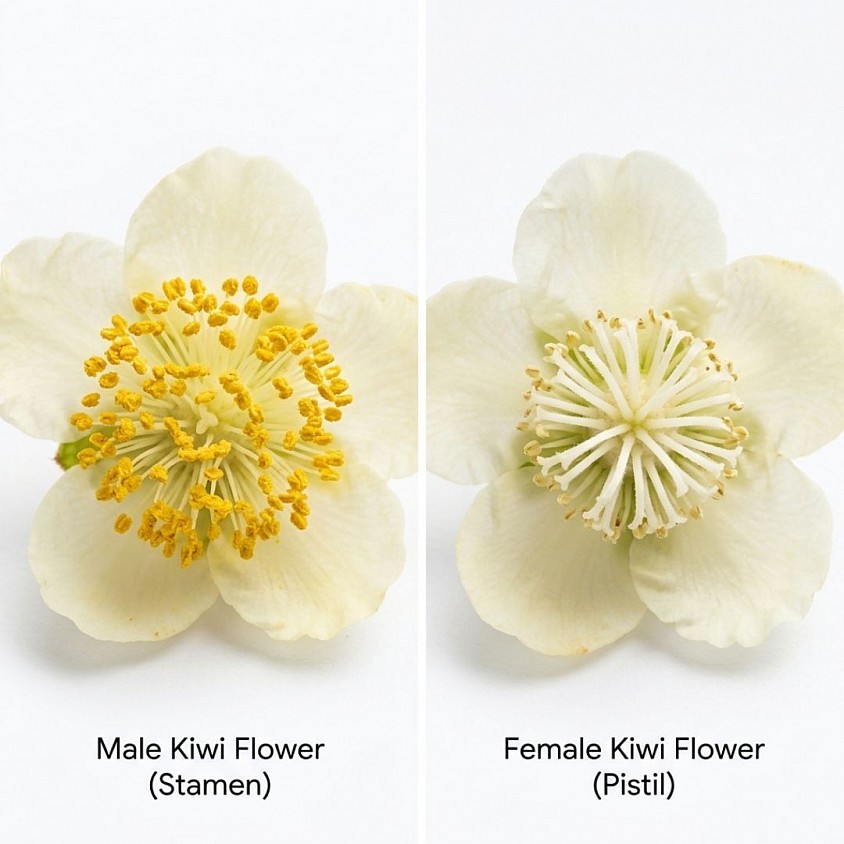
To get fruit from traditional kiwi plants, you do need both male and female plants. Kiwis are dioecious, a botanical term meaning that individual vines carry exclusively male or female flowers. Female kiwi plants produce flowers with large pistils designed to receive pollen and develop into fruit, but they produce no viable pollen of their own. Conversely, male kiwi plants produce flowers laden with pollen-producing stamens, but they lack functional female reproductive organs and will never bear fruit. Without a male vine nearby to supply pollen to the female blossoms, the female flowers will simply drop off without setting fruit.
🥝 The Ideal Ratio of Male to Female Plants
Because male vines do not produce fruit, you do not need an equal number of male and female plants in your garden. A single, healthy male kiwi vine can produce enough pollen to effectively fertilize up to six to eight female vines planted nearby. For home gardeners planting in limited space, a one-to-one ratio works fine, but planting one male to multiple females optimizes fruit yield relative to garden space. The plants should be spaced close enough—typically within four to six meters of each other—to allow pollinators like honeybees and bumblebees to travel easily between the male and female blossoms.
🥝 Self-Fertile Kiwi Varieties as an Alternative
For growers with limited space who cannot accommodate two large vine systems, self-fertile (monoecious or hermaphroditic) kiwi varieties exist. Popular cultivars such as 'Jenny' or 'Issai' (a hardy kiwi variety) have been bred to produce flowers capable of self-pollination, allowing a single plant to produce fruit on its own. While self-fertile varieties eliminate the absolute necessity of planting a separate male vine, their overall fruit size and total yields are often smaller compared to traditional dioecious pairs. Even when growing a self-fertile variety, planting a male companion vine nearby will significantly boost both fruit size and harvest volume.
🥝 Matching Bloom Timing and Plant Selection
When purchasing male and female kiwi plants, ensuring that both varieties bloom at the exact same time is critical. A male vine that blossoms in late October will be ineffective at pollinating a female vine that flowers in mid-November. When sourcing vines from a nursery, always select recognized matching pairs—such as pairing a 'Hayward' female green kiwi with a 'Tomuri' male—to guarantee that their flowering periods overlap perfectly during the spring season.
Understanding the Timing of the Kiwi Fruit Season in South Africa
The arrival of kiwi fruit (*Actinidia*) in South African markets is a highly anticipated event, reflecting a unique dynamic between local agriculture and global supply. While globally kiwi fruit might seem available year-round in supermarkets, consumers looking for the freshest, locally grown produce must understand the natural harvest cycles in South Africa. As a deciduous crop that thrives in specific cool-winter microclimates, the local kiwi season is relatively compact compared to other popular fruits, providing a crucial window for South African farmers to supply domestic and export markets before Northern Hemisphere produce dominates.
🥝 The Core Local Harvesting Window from Mid-Summer to Autumn
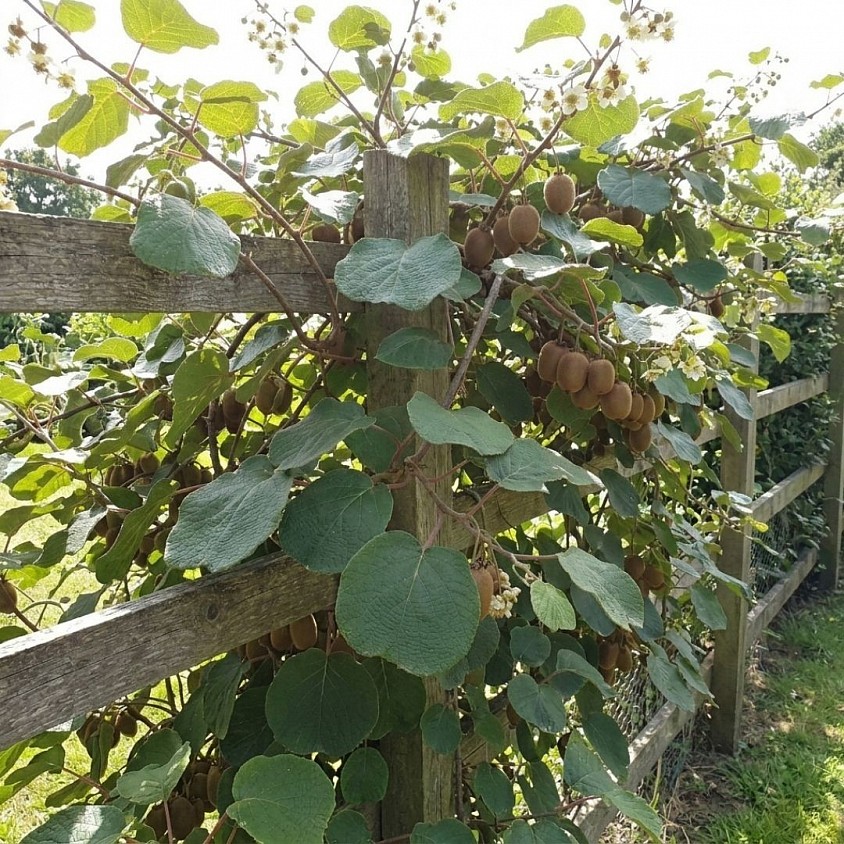
The main harvesting season for locally grown kiwi fruit in South Africa runs from mid-summer through autumn, strictly confined to the Southern Hemisphere's warm growing season. For green kiwi fruit (*Actinidia deliciosa*), the most widely known type, harvesting generally begins in February and typically concludes around April or early May. The precise start time can vary by a few weeks depending on the specific region and the seasonal weather patterns of that year. During this window, the fruit has developed sufficient sugar levels, commonly measured by Brix testing, and is firm enough for transport before ripening fully.
🥝 Regional Variations within South Africa and Gold Kiwi Differences
South Africa's diverse climates allow for slight differences in harvesting times across the distinct production zones. Kiwis planted in slightly warmer, lower-altitude areas might ripen earlier than those in cooler, higher-altitude mist-belt regions like the KwaZulu-Natal Midlands or parts of Mpumalanga, where flowering and subsequent fruit set may occur later. Furthermore, the introduction and expansion of gold kiwi fruit (*Actinidia chinensis*) varieties in South Africa have added another layer to the season. Gold varieties often bloom and ripen earlier than traditional green varieties, often shifting their specific harvest window closer to the start of the summer spectrum, sometimes beginning in January in certain early areas.
🥝 The Seasonal Bridge between the Hemispheres
The specific timing of the South African kiwi harvest offers a strategic advantage in both local and international trade. Because South Africa harvests during the Southern Hemisphere summer and autumn, local kiwi fruit enters the market when Northern Hemisphere suppliers, such as Italy and Greece, are not currently in production and their stored fruit has been depleted. This seasonal timing creates a high-demand market gap, often leading to earlier availability of fresh green kiwi for South African consumers before imported New Zealand fruit hits the shelves and long before the large Northern Hemisphere influx begins later in the year.
🥝 Understanding Post-Harvest Availability and Supermarket Sales
While the physical harvest of kiwi fruit in South Africa ends by early May, the locally grown fruit can often be found in supermarkets for several months following the harvest. Kiwi fruit is climatereic, meaning it can be picked while still firm and then ripened efficiently in cold storage. Because of this ability, packers and retailers can manage the supply of local fruit, maintaining fresh South African kiwis on shelves into the winter months, often until June or July. When local stored supplies are exhausted, supermarkets will transition to importing stored fruit from other Southern Hemisphere countries or later in the year from the Northern Hemisphere, ensuring year-round availability though not year-round local production.
How Do You Ripen a Hard Kiwi at Home?
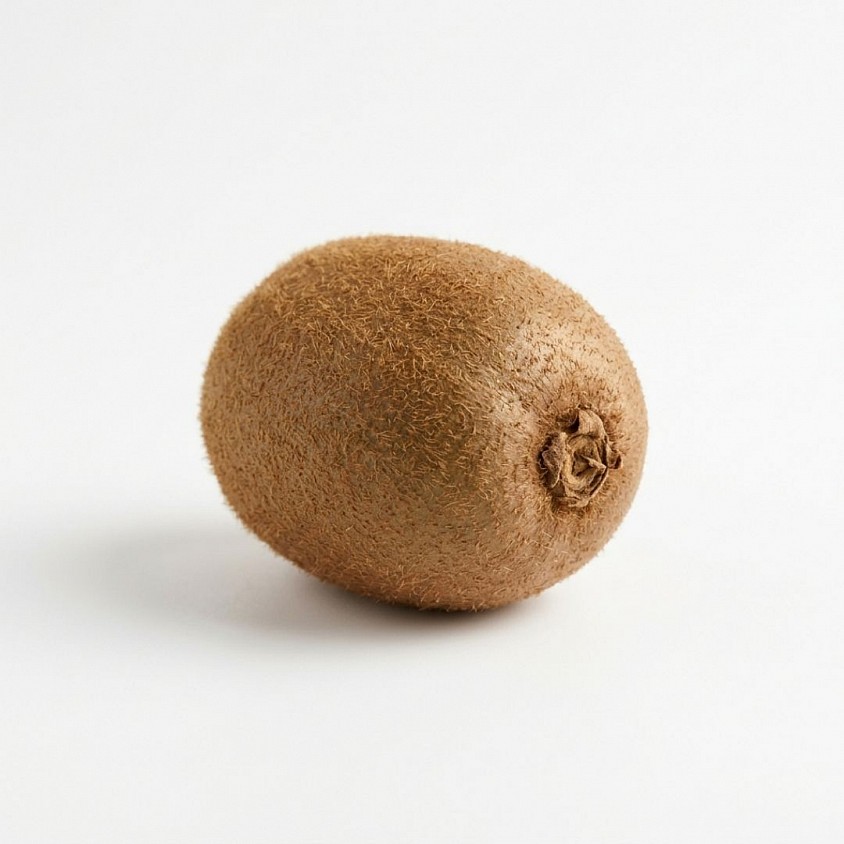
Buying firm, hard kiwis at the grocery store or harvesting them straight from the vine is a common experience. Because kiwi fruit (*Actinidia*) is climacteric—meaning it continues to ripen after being harvested—hard kiwis are actually ideal for transporting and storing without getting bruised. However, biting into an unripened kiwi can be sharp and sour. Fortunately, with a basic understanding of natural ethylene gas and proper room-temperature storage, you can easily transform hard kiwis into sweet, juicy fruits at home.
🥝 The Science of Ethylene and Room-Temperature Ripening
The fundamental key to ripening a hard kiwi is ethylene, a natural plant hormone released in gas form by certain fruits as they mature. When exposed to ethylene gas, the complex starches inside a firm kiwi rapidly convert into simple sugars, while the flesh softens and the characteristic sweet flavor develops. Leaving hard kiwis out on your kitchen counter at room temperature (20 °C to 22 °C) away from direct sunlight will allow them to ripen naturally over three to five days. Never place hard, unripened kiwis directly into the refrigerator if you want them to soften quickly, as cold temperatures dramatically slow down the ripening process.
🥝 The Paper Bag Method for Accelerated Ripening
If you want to speed up the ripening process, the brown paper bag technique is the most efficient home method. Place your hard kiwis inside a plain brown paper bag along with a high ethylene-producing fruit, such as a ripe banana, a red apple, or an avocado. Fold the top of the paper bag loosely to trap the ethylene gas inside while still allowing minimal air circulation. The concentrated ethylene gas surrounding the kiwis will accelerate the softening process, often ripening hard kiwis in just one to two days. Avoid using plastic bags for this process, as plastic traps excess moisture, which can cause the fruit to sweat and develop mold.
🥝 How to Test Kiwis for Perfect Ripeness
Knowing when a kiwi has reached its peak sweetness requires a gentle touch rather than relying solely on visual appearance. Hold the kiwi in the palm of your hand and apply soft, gentle pressure with your thumb. A perfectly ripe kiwi will give slightly to pressure, feeling similar to a ripe avocado or a soft peach, without feeling mushy or hollow underneath the skin. If the kiwi feels rock-hard, it needs more time at room temperature; if it feels soft or wrinkled, it is overripe and should be consumed immediately or blended into a smoothie.
🥝 Storing Ripe Kiwis to Extend Freshness
Once your kiwis have reached your desired level of softness and sweetness, you need to halt the ripening process so they do not become overripe and spoil. Transfer ripe kiwis from the counter or paper bag directly into the crisper drawer of your refrigerator. The cold temperature will slow down their metabolism and hold them at peak ripeness for up to one to two weeks. Keep ripe kiwis separated from other ethylene-emitting fruits in the fridge if you want to prevent them from becoming too soft.
What Is the Difference Between Green Kiwi and Yellow/Gold Kiwi?
While both green and yellow—often called gold—kiwi fruit belong to the same genus (*Actinidia*), they are distinct species with clear differences in appearance, flavor profile, nutritional emphasis, and growing characteristics. Green kiwi (*Actinidia deliciosa*) has long been the classic standard in supermarkets worldwide, but gold kiwi (*Actinidia chinensis*) has rapidly gained popularity among consumers and growers alike. Understanding these key differences helps fruit enthusiasts choose the right variety for their taste preferences and culinary needs.
🥝 Visual Appearance and Texture
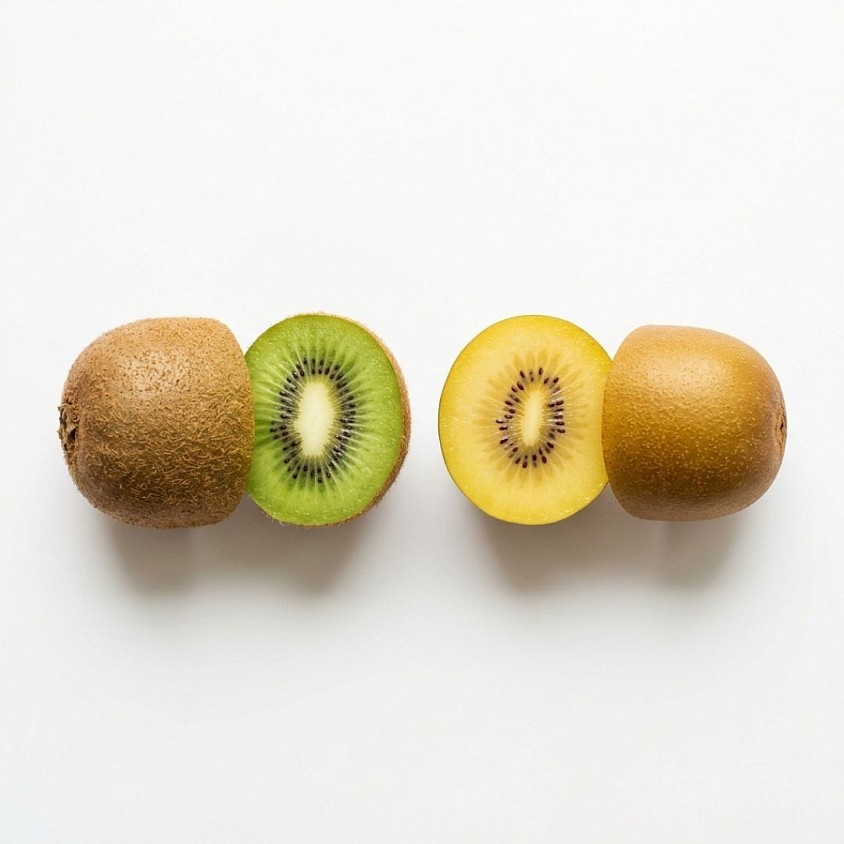
The most immediate difference between the two fruits lies in their physical appearance, both inside and out. Green kiwi features a fuzzy, fibrous, dull-brown skin covering bright green flesh lined with tiny, edible black seeds and a firm white central core. In contrast, gold kiwi has a smooth, virtually hairless, bronze-brown skin. Cutting into a gold kiwi reveals a vibrant yellow-to-golden flesh with a smaller, softer core and fewer, lighter-colored seeds, giving it a sleek, refined visual appeal.
🥝 Taste Profile and Flavor Characteristics
Flavor is where green and gold kiwis diverge most dramatically. Green kiwi is famous for its sweet-tart balance, offering a tangy, refreshing acidity reminiscent of a combination of strawberry, banana, and citrus. Gold kiwi delivers a decidedly sweeter, tropical flavor profile with subtle notes of mango, melon, and peach, containing significantly less titratable acidity than its green counterpart. Because of its smoother skin and lack of fuzz, many people choose to eat gold kiwi whole, skin included, whereas green kiwi is almost universally peeled or scooped.
🥝 Nutritional Comparison and Health Benefits
Both varieties are nutritional powerhouses packed with dietary fiber, potassium, and essential vitamins, but their specific nutrient densities vary slightly. Gold kiwi leads in vitamin C content, often providing more than double the daily recommended intake per fruit—substantially more than an orange or a green kiwi. On the other hand, green kiwi contains higher levels of dietary fiber, making it particularly effective for digestive health. Green kiwi also contains a higher concentration of actinidin, a natural enzyme that breaks down proteins and assists with digestion, though this same enzyme can prevent gelatin from setting when raw green kiwi is used in desserts.
🥝 Growth Habits and Seasonal Availability
For growers and consumers, harvesting windows and climate resilience present another set of contrasts. Green kiwi vines tend to be slightly hardier against late spring frosts and produce firm fruit with an exceptionally long cold-storage shelf life. Gold kiwi vines bloom earlier in spring and ripen earlier in the harvesting season, making gold kiwis available slightly ahead of green kiwis in many markets. However, gold kiwi skins are thinner and more delicate, requiring careful handling during harvest and transport to prevent bruising.
How Many Years Does a Kiwi Vine Take to Bear Fruit in South Africa?
Planting kiwi fruit (*Actinidia*) in South Africa is an exciting long-term investment for home gardeners and commercial growers alike. Known for their vigorous growth and delicious, nutrient-dense harvest, kiwi vines require patience before yielding their first crop. Understanding the exact timeline from planting to fruiting—along with the factors that influence maturation—helps ensure your vines stay healthy and productive for decades to come.
🥝 The General Timeline to First Harvest
In South Africa, a newly planted kiwi vine typically begins to produce its first small crop of fruit within three to four years after planting. During the first two years, the vine focuses almost all of its metabolic energy on establishing a deep, robust root system and building a thick, woody trunk structure. By year three, small clusters of flowers usually begin to appear on one-year-old wood during spring. While a small light crop may develop in the third season, peak commercial fruit yields are generally achieved between five and seven years after establishment, with mature vines capable of bearing heavy crops for up to thirty years or more.
🥝 Timeline Variations Based on Propagation Method
The exact duration before your first harvest depends heavily on how your kiwi vine was propagated. Grafted or cutting-propagated vines purchased from South African nurseries are the standard choice for orchards and gardens because they represent mature genetic wood; these grafted plants usually bear their first trial crop within three years. On the other hand, growing kiwi plants from seeds extracted from supermarket fruit is a much slower process. Seedlings must pass through a lengthy juvenile phase and can take anywhere from six to eight years to flower, with no guarantee of fruit quality or plant gender.
🥝 Crucial Requirements for On-Time Fruiting
To ensure your kiwi vines bloom and set fruit on schedule, several environmental and cultural requirements must be met within the South African context. First, because kiwi vines are dioecious, you must plant both a male and a female vine to get fruit. A female plant will flower at three to four years, but without a matching male vine flowering simultaneously nearby to provide pollen, the blossoms will drop without producing fruit.
Second, kiwi plants require a period of winter cold to break dormancy and stimulate floral bud development. Regions with cool winters—such as the Mpumalanga highveld, KwaZulu-Natal mist belt, or parts of the Western Cape—provide the ideal chill hours necessary to ensure reliable spring flowering.
Third, kiwi vines fruit on shoots that grow from one-year-old canes. Installing strong trellising and performing annual winter and summer pruning encourages the formation of fruiting spurs, directly speeding up the time it takes for a young plant to produce a bountiful harvest.
Are Strawberries Actually Berries?
Despite their name and their everyday classification in culinary terms, botanically speaking, strawberries are not actually berries at all. When browsing the produce aisle or making a summer dessert, calling a strawberry a berry makes perfect sense. However, when viewed through the lens of plant anatomy and scientific taxonomy, the strawberry is a fascinating imposter that belongs to an entirely different structural category of fruit.
🍓 What Defines a True Berry in Botany?
To understand why a strawberry fails the botanical test for being a berry, one must first look at how botanists define a true berry. In botanical science, a berry is a fleshy fruit produced from a single ovary of a single flower. A true berry consists of three distinct anatomical layers: the exocarp or outer skin, the mesocarp or fleshy middle layer, and the endocarp or innermost layer surrounding the seeds. Crucially, in a true botanical berry, the seeds are embedded directly inside the soft, fleshy interior of the fruit rather than sitting on the exterior surface. Under this strict scientific definition, fruits like tomatoes, blueberries, bananas, watermelons, and even avocados qualify as true berries, whereas strawberries do not.
🍓 What Is a Strawberry Botanically?
If a strawberry is not a true berry, what is it? Scientifically, a strawberry (*Fragaria × ananassa*) is classified as an aggregate accessory fruit. It is deemed an aggregate fruit because it develops from a single flower that contains multiple separate ovaries. It is considered an accessory fruit because the sweet, red, fleshy part that we enjoy eating is not actually derived from the plant's ovaries. Instead, the red fleshy structure is the swollen receptacle tissue, which is the part of the stem that connects the flower to the plant. As the flower is pollinated, this receptacle expands dramatically to hold and present the true fruits of the plant.
🍓 The Surprising Truth About Strawberry "Seeds"
The most visible clue to a strawberry’s unique structure sits right on its surface. The small, seed-like specks scattered across the outside of a strawberry are not actually seeds. Botanically, each of those tiny yellow or brown specks is an individual dry fruit called an achene. Inside every achene sits a single, microscopic seed. Therefore, when you eat a single strawberry, you are actually consuming dozens of individual fruits held together by a large, sugary, modified stem tissue.
🍓 How the Strawberry Got Its Misleading Name
The common name "strawberry" pre-dates modern botanical classification systems by centuries. Long before 18th-century botanists established exact structural rules for fruit morphology, everyday language grouped fruits based on how they looked, tasted, and were harvested. English speakers used the word "berry" to describe almost any small, sweet, juicy, brightly colored fruit that grew on low bushes or vines. The origin of the prefix "straw" remains debated, with theories suggesting it stems from the straw mulch traditionally placed around the plants, the straw-like runner stems that spread across the ground, or an ancient Old English word meaning "strewn," referring to how the fruit lies scattered along the soil.
How Much Sun Do Strawberry Plants Need to Grow?
Unlocking a abundant harvest of sweet, juicy strawberries (*Fragaria × ananassa*) begins with selecting the right location in your garden. Sunlight is the primary driver of energy for strawberry plants, powering photosynthesis, stimulating abundant flowering, and developing the deep red color and high sugar content that make homegrown strawberries so delicious. Understanding the exact light requirements of strawberry plants allows both home gardeners and commercial growers to optimize planting locations for maximum health and yield.
🍓 The Ideal Sunlight Requirement: Full Sun
Strawberry plants thrive best when planted in full sun, which botanically translates to a minimum of six to eight hours of direct, unfiltered sunlight each day. For maximum fruit production and sweet flavor, ten or more hours of direct sunlight per day is even better. Direct sunlight provides the intensity required for the plant to manufacture the carbohydrates needed for robust growth and fruit development. Plants grown in locations that receive eight full hours of sun will consistently produce larger, sweeter berries and significantly higher yields compared to those grown in shaded environments.
🍓 What Happens When Strawberry Plants Receive Too Little Light?
While strawberry plants can survive in partial shade—receiving around four to six hours of sunlight daily—their overall performance drops noticeably. In shaded conditions, strawberry plants tend to focus their energy on growing leggy, elongated leaves and runner stems as they reach toward the light, rather than setting flower buds. The reduced sunlight leads to fewer blossoms, smaller berries, and a tart, washed-out flavor due to lower sugar accumulation. Additionally, plants in shaded areas stay wet longer after rain or morning dew, creating a damp microclimate that dramatically increases the risk of fungal diseases such as powdery mildew and gray mold (*Botrytis cinerea*).
🍓 Managing Intense Sun and Heat Stress
While strawberry plants love sunlight, extreme atmospheric heat accompanied by harsh sunlight can cause stress, particularly in warmer climates. When ambient temperatures rise above thirty degrees Celsius, strawberry plants may slow down their growth and temporarily stop setting new fruit, regardless of how much sun they receive. In hot regions, providing full morning sun combined with light afternoon shade or utilizing a light shade cloth during the hottest summer months protects the delicate leaves and berries from sunscald without compromising the plant's overall energy needs.
🍓 Optimizing Sun Exposure in the Garden
To ensure your strawberry patch gets uniform light exposure, row orientation and spacing play a major role. Planting rows in a north-to-south direction prevents individual plants from shading one another as the sun moves across the sky throughout the day. Keeping the area around your strawberries free from tall weeds or overhanging tree branches further ensures that every leaf gets unobstructed access to sunlight, setting the stage for a healthy plant and a heavy seasonal harvest.