Klein Karoo Biltong

Klein Karoo Biltong

Menu

How Authentic South African Biltong Is Truly Made

A Heritage Preserved Through Skill, Patience, and Respect

Traditional biltong is not simply dried meat. It is a craft shaped by generations of South Africans who learned to work with their climate, their ingredients, and their environment long before refrigeration existed. At Klein Karoo Biltong, we honour this heritage by teaching the authentic, disciplined method that has defined biltong for centuries. Every step reflects a philosophy: simplicity, patience, and a deep respect for the natural process of transforming fresh meat into something extraordinary.

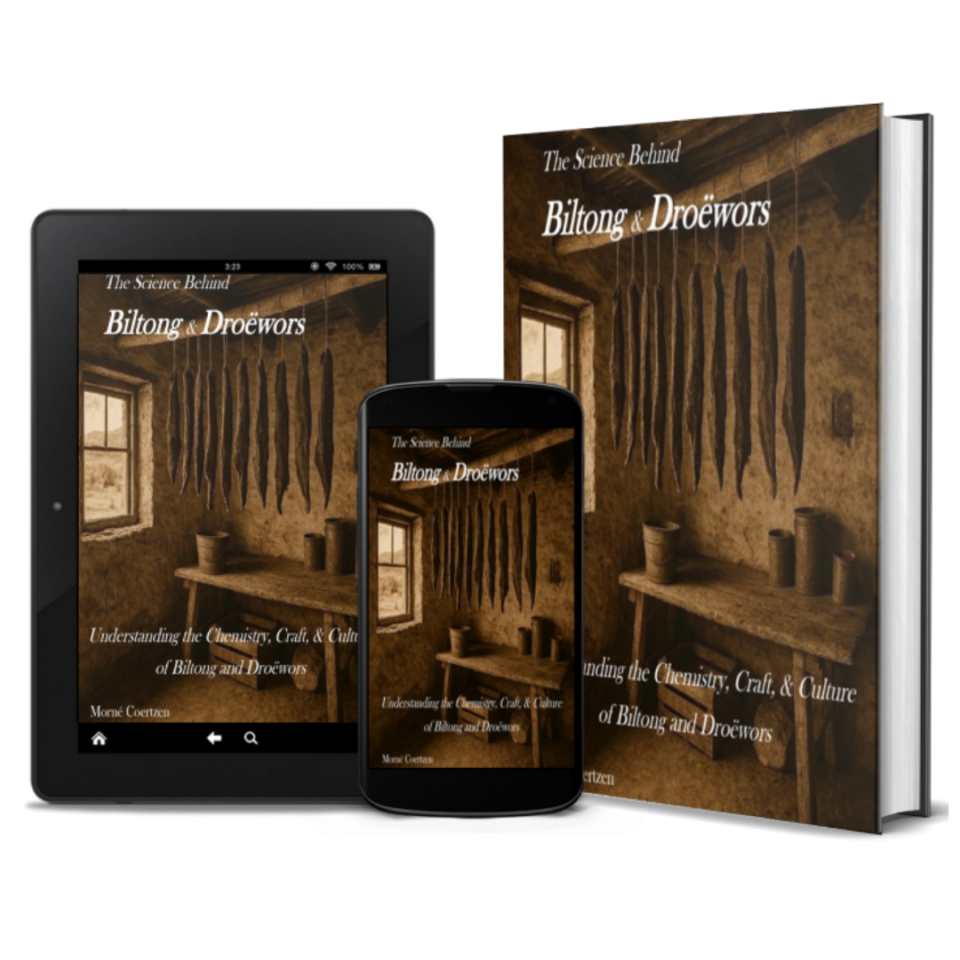
This page gives you a clear understanding of how traditional biltong is made. If you want the complete, step‑by‑step method — including spice ratios, curing times, drying conditions, troubleshooting, and food‑safety guidance — our book offers the most comprehensive biltong education available anywhere.

1. Choosing Meat With Purpose

Traditional biltong begins long before spices touch the surface. It starts with intention — selecting meat that will dry evenly, hold flavour, and develop the texture that defines true biltong. South Africans historically chose cuts with long muscle fibres and balanced internal moisture. These qualities allow the meat to dry slowly without becoming brittle or crumbly.

The philosophy is simple: the meat must be clean, fresh, and respected. Traditional makers never rushed this step, because the quality of the final product is determined here, before the first spice is added.

2. Preparing the Meat for the Journey Ahead

Once the right cut is selected, the meat is shaped with purpose. Traditional slicing follows the natural grain of the muscle, creating long strips that dry consistently from end to end. The thickness is deliberate — thick enough to retain tenderness, thin enough to allow airflow to do its work.

This stage is where the maker’s experience shows. Every strip is prepared with the final texture in mind, because biltong is not cooked; it is transformed through time and air.

3. The Spice Philosophy: Simple, Honest, Essential

Traditional biltong is built on a minimalist spice foundation. Instead of complex marinades or artificial flavourings, the craft relies on a few honest ingredients that have stood the test of time. The spices are not chosen for intensity but for balance — each one playing a role in flavour, preservation, and aroma.

The heart of the tradition is restraint. The goal is not to overpower the meat but to enhance it. This is why traditional biltong tastes like biltong — not jerky, not smoked meat, not seasoned strips — but something uniquely South African.

4. Vinegar: The Quiet Architect of Flavour and Safety

Vinegar is one of the most misunderstood elements of biltong making. In traditional practice, it is not used to soak the meat or drown it in acidity. Instead, it is applied lightly and deliberately. Its purpose is twofold: to prepare the surface of the meat for the spices and to create an environment that naturally discourages unwanted bacteria.

This step is subtle but essential. Traditional makers understood its value long before modern food science explained why it works.

5. The Resting Stage: Where Flavour Takes Root

After seasoning, the meat enters a quiet stage — a period of rest where the spices and vinegar begin to settle into the fibres. This is not a marinade in the modern sense. It is a controlled pause, allowing the meat to firm up and the flavours to align.

Traditional makers judged this stage not by the clock but by feel. They understood the signs: the slight tightening of the fibres, the deepening of the aroma, the readiness of the meat to begin its transformation.

6. Air‑Drying: The Heart of the Craft

Drying is where biltong becomes biltong. Traditional South Africans relied on natural airflow — cool, dry, and steady — to slowly remove moisture from the meat. This method is what gives biltong its unmistakable texture: firm on the outside, tender within, and rich with natural flavour.

The key principle is patience. Traditional biltong is never cooked, smoked, or force‑dried. It is shaped by air, time, and the maker’s understanding of their environment. Every climate, every season, and every drying space adds its own character to the final product.

Why Traditional Biltong Still Matters Today

In a world of shortcuts and mass‑produced snacks, traditional biltong stands apart. It represents:

• A connection to South African heritage

• A natural, unprocessed approach to food

• A craft that values skill over speed

• A flavour profile that cannot be replicated by machines

At Klein Karoo Biltong, we believe that preserving this tradition is essential. It is not only about taste — it is about identity, history, and the pride of making something with your own hands.

Master the Full Process With Our Step‑By‑Step Guide

This page gives you the philosophy and the foundations. But if you want to learn the complete, detailed, fully traditional method, our book is your next step.

Inside, you’ll find:

• A precise, step‑by‑step biltong method

• Traditional spice ratios and variations

• Drying techniques for any climate

• Food‑safety and hygiene guidance

• Troubleshooting for texture, flavour, and drying issues

• Heritage insights and cultural context

• Equipment guidance for beginners and professionals

It is the most complete, research‑driven biltong guide ever written — and the only one you will ever need.

Bring the Tradition Into Your Home

Traditional biltong is more than a recipe. It is a craft that rewards patience, respect, and understanding. With the right knowledge, anyone can learn to make biltong that honours the heritage of South Africa.

If you’re ready to begin, explore our book and take your first step into the world of authentic, traditional biltong making.

Klein Karoo Biltong © 2026
X