Common Drying Problems and How to Fix Them
Drying meat is a natural process, but nature doesn’t always behave predictably. Even experienced makers encounter batches that dry unevenly, develop unusual textures, or show signs that something in the environment is out of balance. Traditional makers in the Klein Karoo learned to read these signs long before the science was understood. They watched the meat, felt its surface, and adjusted their methods instinctively.
Today, the same principle applies: drying problems are not failures — they are messages. When you understand what the meat is telling you, you can correct the issue and guide the batch back toward safety and quality. Below are the most common drying challenges and the basic steps to address them. The full troubleshooting system, environmental guidelines, and corrective techniques are explained in detail in the book.
Case Hardening — When the Outside Dries Too Fast
Case hardening happens when the surface dries too quickly and forms a firm shell while the inside remains soft or wet. This usually occurs when airflow is too strong or temperatures are too high.
What it means:
The environment is rushing the process.
Basic fix:
Move the meat into a gentler environment and reduce direct airflow. Allow the moisture inside the meat to migrate outward naturally. Once the texture evens out, return it to a controlled drying space.
(The book explains how to prevent case hardening entirely and how to recover borderline batches.)
Slow Drying — When the Meat Stays Wet for Too Long
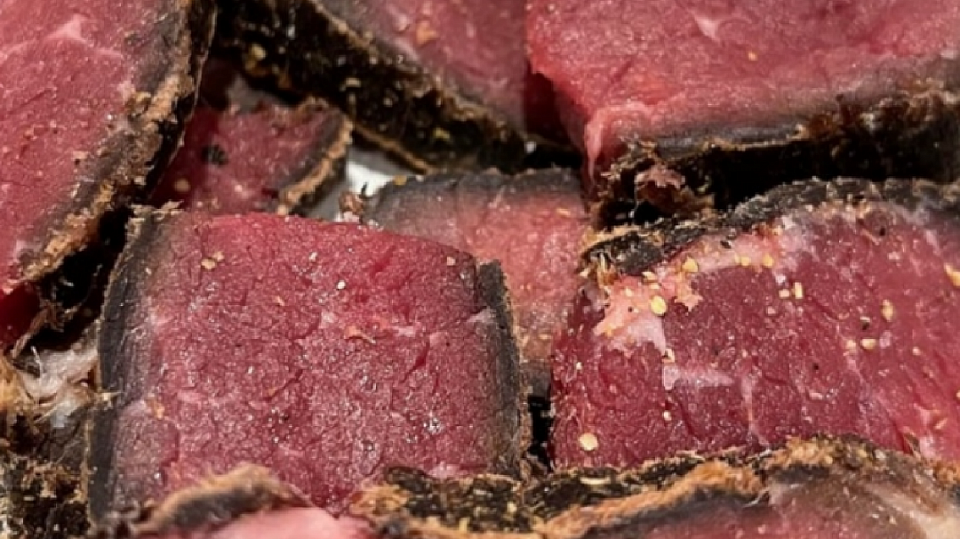
Slow drying occurs when humidity is too high, airflow is too weak, or temperatures are too low. The meat stays soft and cool to the touch for longer than it should, keeping it in the vulnerable stage where bacteria can grow.
What it means:
The environment is too damp or too still.
Basic fix:
Improve airflow gently, reduce humidity, or raise the temperature slightly — without forcing the process. Small adjustments are safer than aggressive changes.
(The book covers exact humidity ranges, airflow patterns, and how to stabilise drying in difficult climates.)
Surface Mould — When White or Green Spots Appear
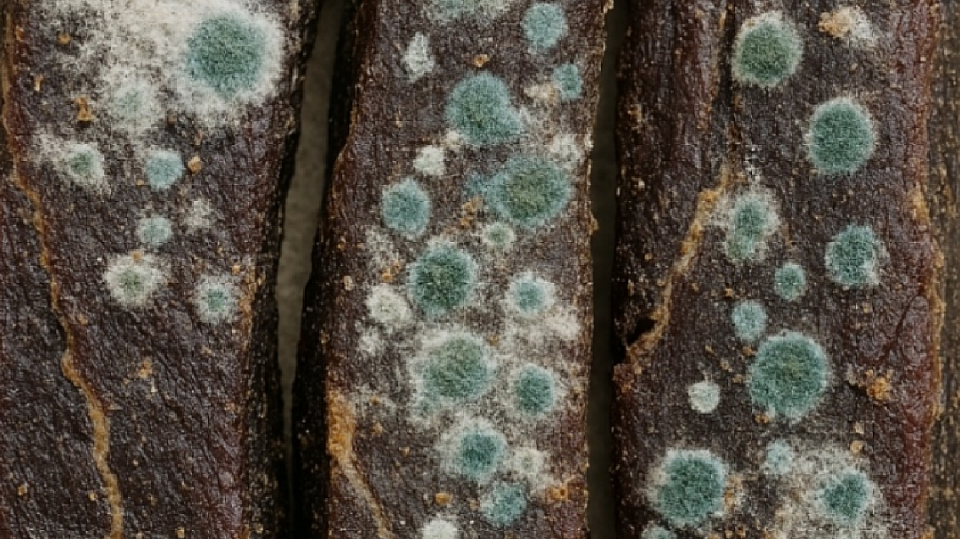
A thin layer of white, powdery mould can appear in humid or stagnant conditions. It is usually harmless but signals that the environment is not ideal. Green, black, or fuzzy mould indicates spoilage.
What it means:
The air is too humid or not moving enough.
Basic fix:
Light white mould can be wiped away with vinegar and corrected by improving airflow. Green or black mould requires discarding the affected pieces.
(The book explains mould types, prevention strategies, and how to stabilise drying in high‑humidity regions.)
Sour Smell — When Fermentation Begins
A sour smell is a clear warning that bacteria have begun to ferment the meat. This often happens when the meat was not fresh, the curing was uneven, or the environment was too warm and humid. Droëwors is especially vulnerable because minced meat exposes more surface area.
What it means:
The batch is unsafe.
Basic fix:
Discard the meat. Sourness cannot be reversed. Prevention — fresh meat, proper curing, and stable conditions — is the only solution.
(The book details the causes of souring and how to prevent it at each stage.)
Greasy or Rancid Fat — When the Fat Breaks Down
Fat stability is one of the most important aspects of drying. Stable fats remain firm and clean; unstable fats oxidise quickly and spoil the batch. Warm environments, poor fat quality, or incorrect handling accelerate rancidity.
What it means:
The fat was stressed by heat, oxygen, or instability.
Basic fix:
Move the meat to a cooler environment and review your fat handling. Rancid fat cannot be saved.
(The book explains fat chemistry, oxidation pathways, and how to protect fat from the start.)
Uneven Drying — When Some Pieces Finish Before Others
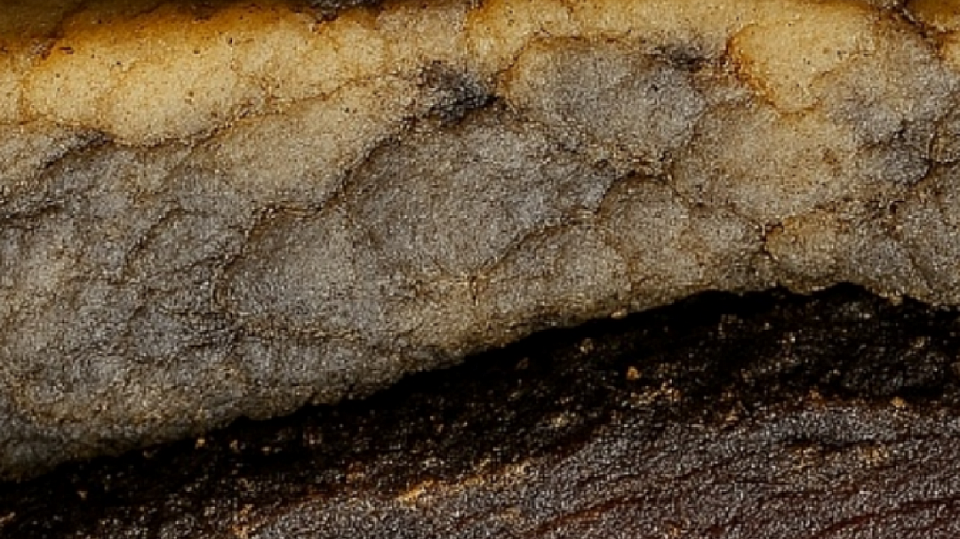
Uneven drying happens when slices vary in thickness, pieces hang too close together, or airflow is inconsistent.
What it means:
The environment is unbalanced.
Basic fix:
Ensure consistent slicing, increase spacing, and adjust airflow so all sides dry evenly.
Droëwors Collapsing or Becoming Hollow
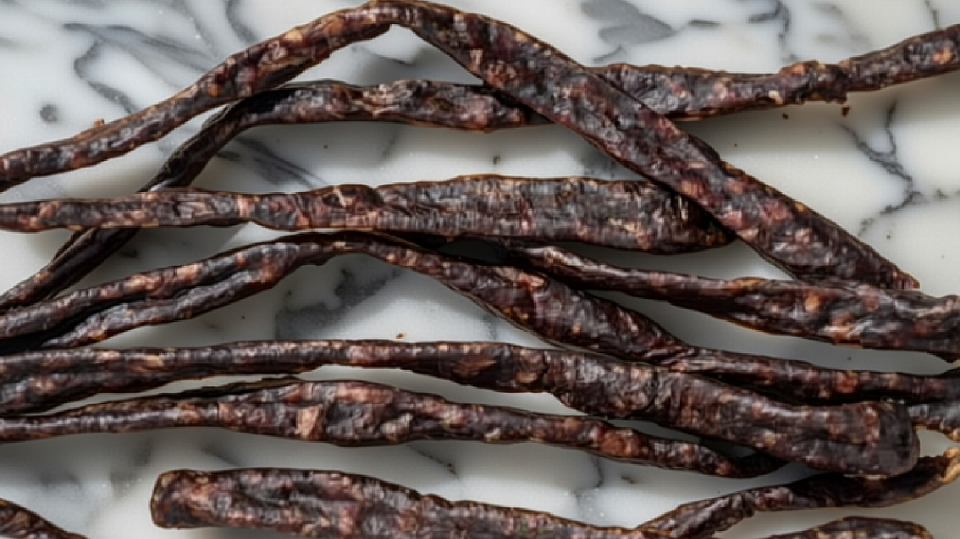
Droëwors can collapse or form hollow centres when the casing dries faster than the inside or when the fat content is incorrect. This creates a tube‑like structure with an empty centre.
What it means:
The process was rushed or the fat ratio was incorrect.
Basic fix:
Use the correct fat ratio and dry in a gentle, balanced environment.
(The book explains the exact ratios, casing behaviour, and how to prevent hollow droëwors.)
Every Drying Problem Has a Cause — and a Solution
Drying problems are not failures — they are lessons. Each issue reveals something about the environment, the meat, or the method. Traditional makers learned these lessons through necessity. Today, you have the advantage of both tradition and science.
This page offers only a glimpse of the troubleshooting system.
The full explanations, environmental ranges, corrective techniques, and prevention strategies are available in the book.